

Fashion brand Asket has revealed this week how it uses its product information management (PIM) technology to surface sustainability information for display on its online product description pages (PDP).
According to the Sweden-based digital-first retailer, which currently operates one store and one repair centre in Stockholm and is on a mission to grow while spreading a message to consumers about the environmental dangers of overconsumption, it is important for every garment it sells online to be accompanied by its “story”. This stance means PDPs include a complete cost breakdown and environmental impact description.
To achieve this, it utilises Akeneo’s PIM solution, which enables the retailer to store, organise, and distribute its vast amounts of product data to create content-rich PDPs.
Vidar Trojenborg, head of technology & data at Asket, commented: “Before we had a PIM, we stored all of this information in Excel and Google Sheets, which was cumbersome and inefficient.
“With Akeneo, we can now manage and share product data seamlessly.”
Asket discloses its supply chain traceability, environmental footprint, and cost structure on each garment, including information on all factories and production facilities used to create its clothing. In addition, the average salaries, shift lengths and imagery of the working conditions used in its manufacturing and sourcing processes is made transparent.
“Building to last – both in terms of products and business strategies – requires thinking about the entire lifecycle, from design to production to end-of-life,” Trojenborg noted.
Unlike traditional fashion brands that produce multiple collections each year, Asket – which was founded in 2015 – offers a permanent collection of carefully designed garments. It believes this approach minimises waste and encourages consumers to invest in high-quality pieces that have durability.
Asket’s standpoint supports its philosophy, ‘The Pursuit of Less’, which is a commitment to reducing extraction, exploitation, and waste while promoting longevity and responsibility.
“When we set out to change the fashion industry, we realised that in order for our customers to appreciate the true value and cost of producing a garment, we needed to bring them along on the journey,” Trojenborg added.
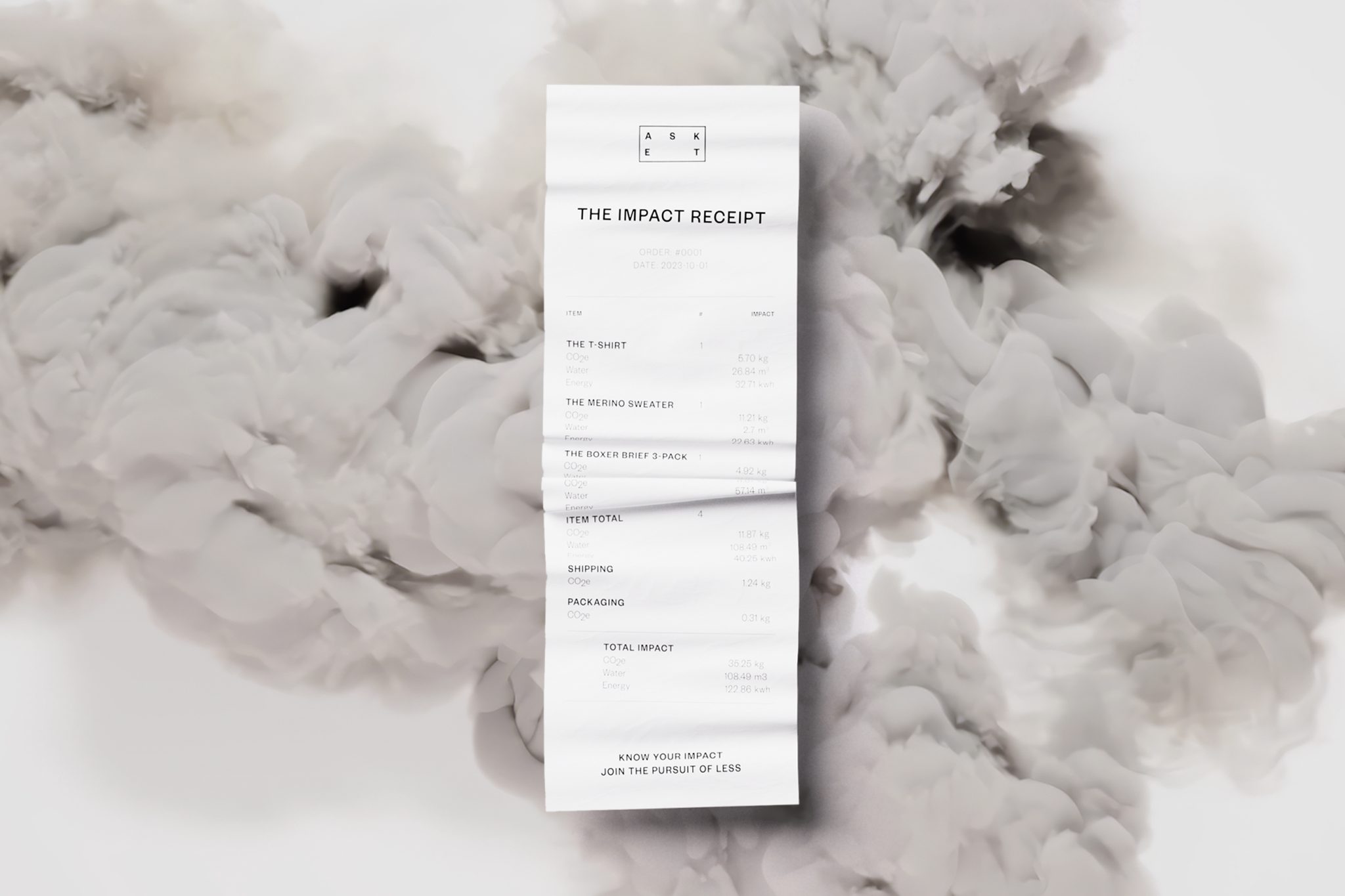
One year ago, Asket started issuing an ‘impact receipt’ alongside the traditional monetary receipt on all of its products, accounting for the environmental cost of each purchase a consumer makes.
Having a receipt like this is viewed as a way of helping boost customers’ knowledge of the impact their behaviour has on the wider planet. It provides upfront information on CO2e emissions, water-use, and energy consumption of every garment.
Justin Thomas, vice president of sales for the north EMEA region at Akeneo, remarked: “By embracing the power of product information, Asket is both embracing and leading the responsible consumption revolution, which is critical as consumers demand a future where purchasing decisions are built on transparency and environmental and social impact scores, not just convenience and price.”
[image credit: Asket]


