
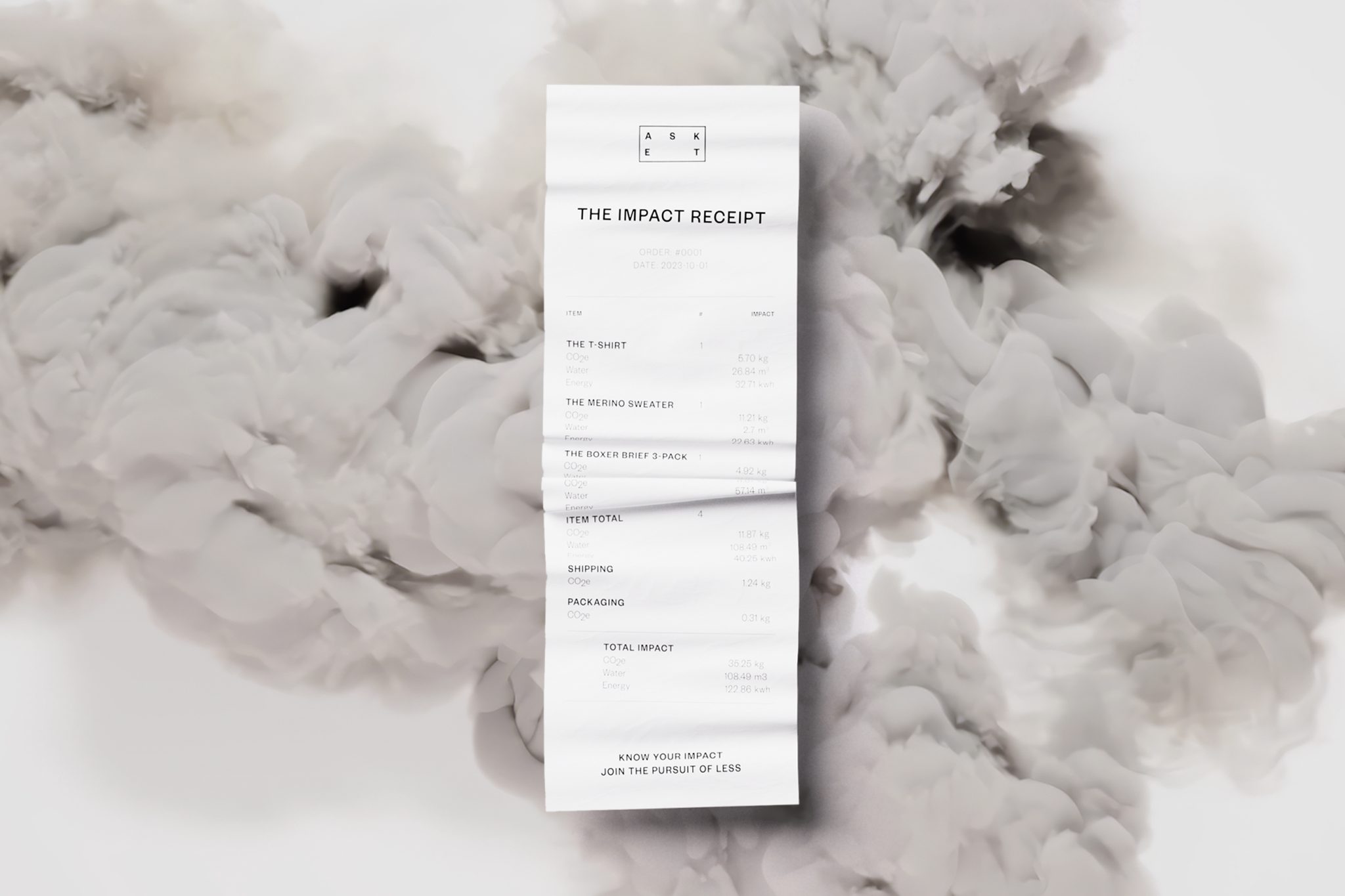

Sweden-based apparel brand Asket has started issuing an ‘impact receipt’ alongside the traditional monetary receipt on all of its products, accounting for the environmental cost of each purchase a consumer makes.
In what the brand said was an effort to curb modern consumption habits, (editor’s note – a staggering thing for a retailer to say when the model of the industry it operates in is based on consumption), the impact receipt is expected to help boost customers’ knowledge of the impact their behaviour has on the wider planet.
Asket said the receipt will front-up information on CO2e emissions, water-use, and energy consumption of every garment purchased. The retailer, which was founded in Stockholm in 2015, said it wants to shift consumers’ relationship to clothing “from transactional, to meaningful” and enable people to keep track of their “consumption-based footprint”.
The retailer launched the impact receipt concept for some products in 2020, but will be issuing the receipt with every single transaction from now on and rolling it out for all garments as it has the data to do so.
August Bard Bringéus, co-founder of Asket, remarked: “Because we’ve only ever been told the price consumers pay for a garment, the industry has created a disconnect between our shopping habits and its impact.
“As a result we’ve amassed an irrevocable environmental debt. And until we put a price on our planet’s resources and understand what our choices actually cost, we’ll never make concessions to the consumption we think we’re entitled to.”
The receipts are sent to the consumer’s email post purchase, but in another move to enhance transparency the environmental data is also available on each individual garments’ online product page. Asket also highlights the impact associated with the packaging and shipping choices accompanying the product purchases.
Asket said the decision to do this was part of its ambition to “re-establish the true value of garments”.
The brand has partnered with Vaayu Tech to process and calculate the lifecycle impact assessments, taking into account all facilities and processes that go into creating a garment – from farming to yarn spinning, fabric weaving, dyeing through to construction and all transportation in between.
Asket breaks the information into four tiers: raw materials, milling, manufacturing, and transports and trims.
Although UK retail-focused, from time to time Green Retail World will look at interesting examples of greener retailing from the rest of the world. Take a look at a fresh approach to energy efficiency in the US, from Chipotle.
[Image credit: Asket]


