

Sporting goods retailer Intersport has spoken of a move towards “energy self-sufficiency” by deploying solar panels at its headquarters in Germany.
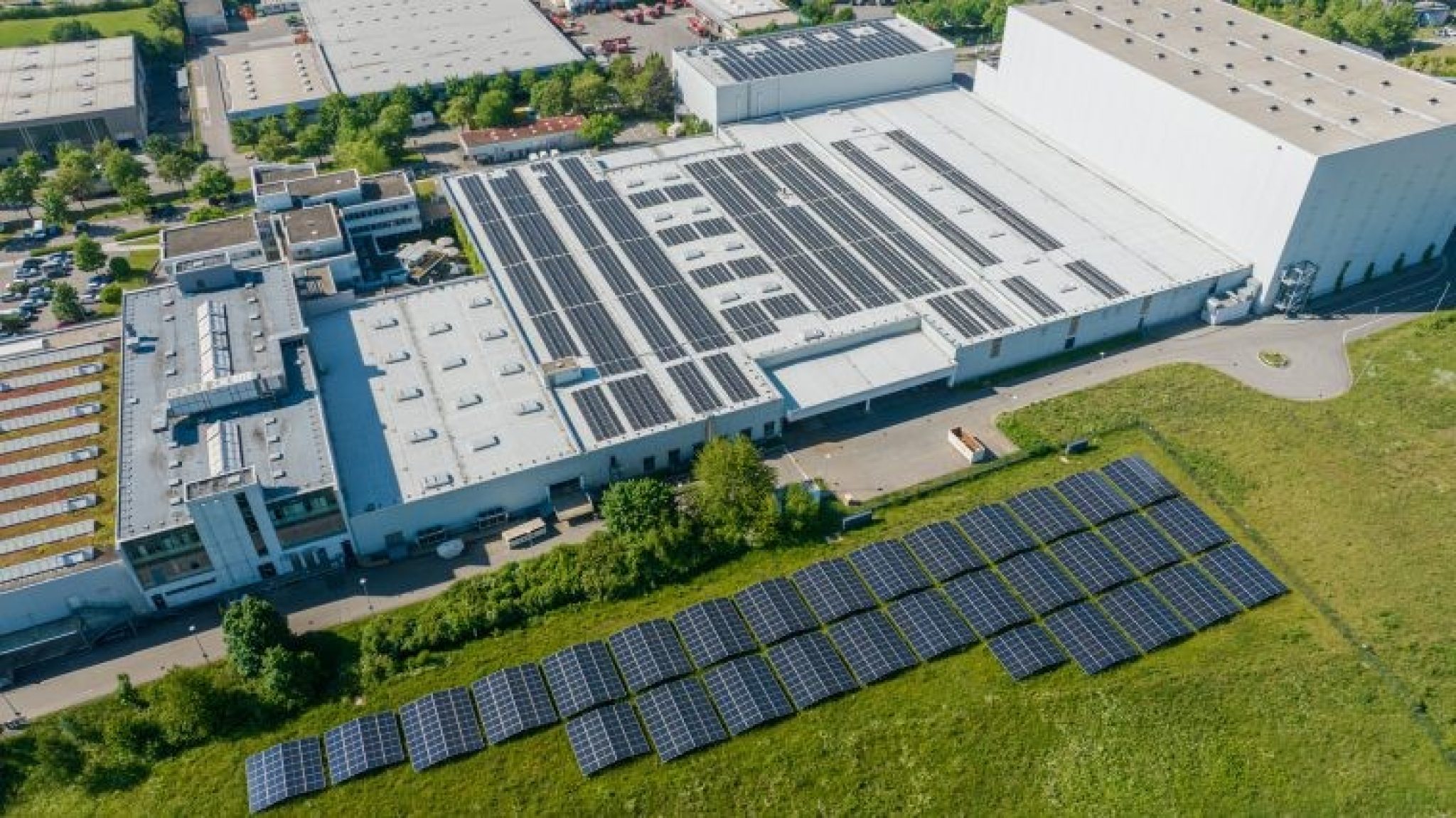
The company has invested in a large-scale 2.2MWp photovoltaic (PV) system at its site in Heilbronn. It is expected the system will cut approximately 16,000 tonnes of CO₂ emissions over the system’s lifetime and strengthen the retailer’s grid independence.
Intersport said half of the energy generated from the PV system will be used for self-consumption, covering the HQ, its 27,000 sq m logistics centre, and its ‘Redblue’ venue which hosts over 40 events a year, with the remaining energy sold to the grid and therefore serving as a new revenue stream for the organisation.
The system
The PV system spans four rooftops and a ground-mounted installation in the outdoor area.
Installer SO.LE. designed the Heilbronn project, and it said it had to overcome significant technical challenges in order to do so.
With three separate grid connection points, the PV system had to be divided into multiple interconnected units. The safety requirements were met thanks to SolarEdge’s SafeDC technology, an integrated fire protection mechanism, which the manufacturer said enables automatic module-level shutdown in the case of emergencies.
Meanwhile, SolarEdge power optimisers were chosen to deliver what was described as a significantly higher energy yield compared to conventional PV technology. By allowing each panel to operate at its individual maximum output, the manufacturers said the system maximises overall production to deliver both higher environmental and economic returns.
What’s more, SolarEdge offers monitoring that ensures the retailer has panel-level, real-time performance monitoring and fault detection.
Intersport noted it is expecting a significant reduction in operational costs and electricity bills as a result of the move. It also operates a combined heat and power system, with most of the electricity generated by this plant also consumed on-site, and the resulting waste heat used to warm the buildings.
Thomas Storck, chief financial officer and deputy chairman of the board at Intersport Germany, said: “It is crucial for us as a company to become more independent in our energy supply, especially in times of economic and geopolitical uncertainty.
“The energy crisis of recent years has clearly shown how important a forward-looking and independent energy policy is. By investing in the PV system, we have taken an important step toward energy self-sufficiency for our site in Heilbronn – a significant milestone on our path to greater energy independence.”
He added: “Our customers can rest assured that acting responsibly and with an eye to the future is part of our corporate DNA as a cooperative. By investing in solar, we are reinforcing this commitment.”
Read more about solar panels in retail on Green Retail World
[image credit: Intersport/SolarEdge/SO.LE.]


