
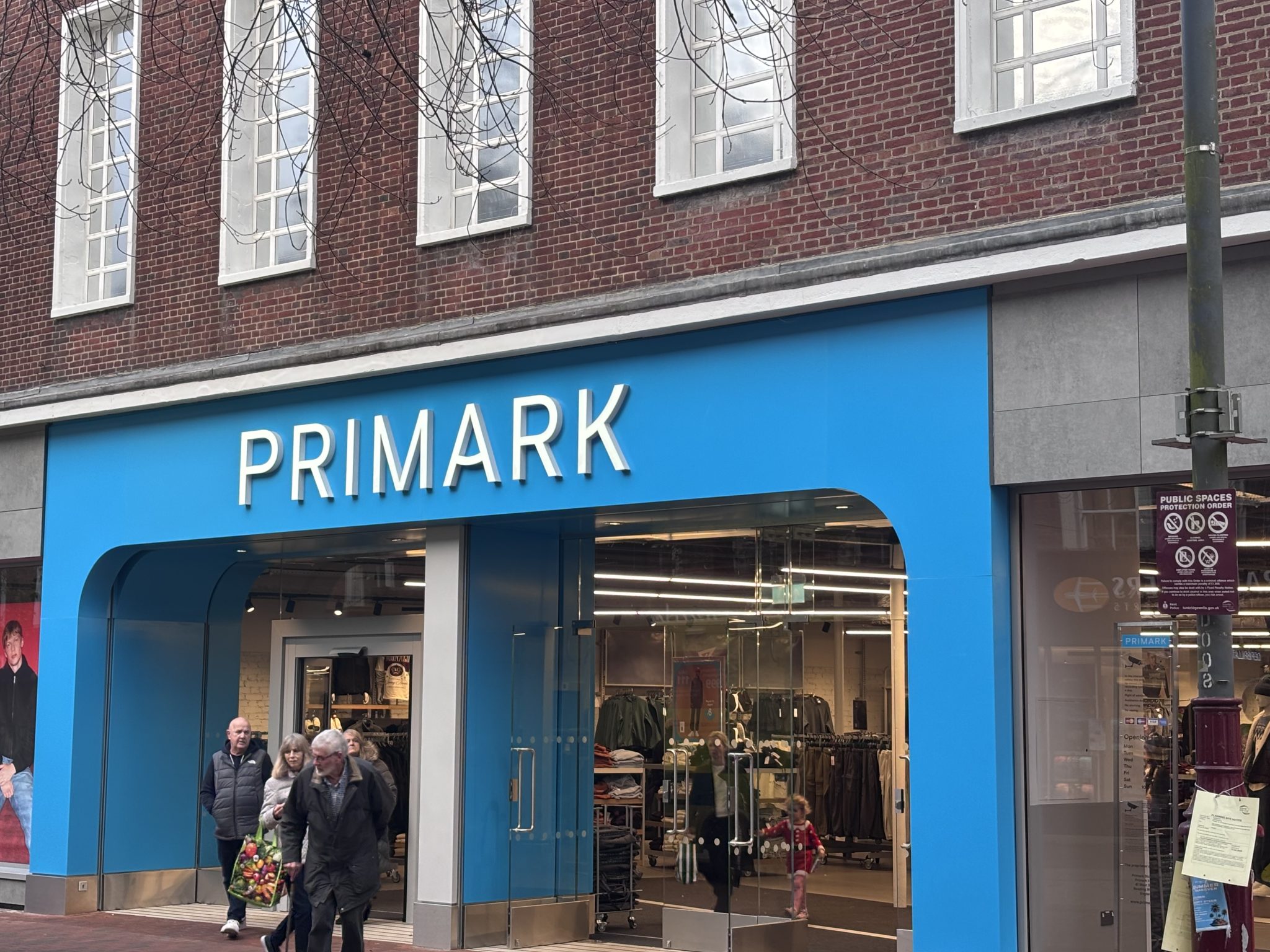

Primark, Decathlon, H&M, and Vinted are among the retailers urging governments to fix a system they say is stacked against circular economy business models.
Nearly 70 organisations said the current economic setup, including taxation, is preventing circular fashion models from reaching scale.
Etsy, Zalando, and Arc’teryx are also on the list of retailers to have signed a joint statement coordinated by the Ellen MacArthur Foundation calling for targeted policy changes across the EU, US, and Canada.
The retailers’ argument is that current economic systems favour the production of new garments over resale and repair, despite growing consumer demand for more sustainable and affordable shopping options.
The statement outlines three key measures businesses want governments to adopt: reduced VAT in the EU and the removal of sales tax in North America for resale and repair services; lower labour taxes and targeted tax credits for circular business models; and Extended Producer Responsibility schemes to help fund large-scale clothing collection and sorting infrastructure.
According to the foundation, resale and repair businesses are currently hit by high labour costs and repeated taxation on products each time they are resold, making circular operations less competitive than linear production models.
Leyla Ertur, chief sustainability officer at H&M Group, said resale is increasingly aligned with customer expectations around affordability and sustainability, but warned the sector remains economically disadvantaged. She called on governments to remove “double taxation” and other barriers holding back growth in circular fashion.
Meanwhile, Marianne Gybels, senior director of sustainability at Vinted, said second-hand fashion has already become embedded in everyday shopping habits across Europe, although policy support is still needed to make circular choices more accessible and scalable for consumers.
The business coalition’s appeal coincides with new research from the Foundation, titled The New Bottom Line: Policy levers to scale resale and repair for fashion. The report suggests targeted policy interventions could increase gross profit margins to as much as 55% for resale and around 41% for repair.
The research also highlights the wider economic opportunity, with the resale and repair market projected to reach $393 billion by 2030 and grow at twice the pace of the wider fashion sector.
The initiative forms part of The Fashion ReModel project, which supports brands and retailers exploring ways to generate revenue without producing new clothing. Early results from participating businesses indicate revenue from resale, rental, repair and remaking is growing four times faster than the rest of their operations, although it still represents a relatively small proportion of total turnover.
Mark Buckley, fashion & textiles lead at the Ellen MacArthur Foundation, said current market conditions continue to incentivise the use of virgin resources over extending product life, despite the significant commercial and environmental potential of circular fashion models.
Earlier this week, Vinted announced results of its recent research which showed its buyers collectively saved €21.6 billion on adult fashion items alone in 2025 – paying on average 72% less than the original retail price.
Read more about second-hand fashion on Green Retail World
[image credit: Green Retail World]


