

The UK convenience market is set to grow to be worth £56.2 billion by 2030, according to research and analyst group IGD.
But although that opportunity to grow is there for all, driven by the time-poor consumer’s demand for food-to-go and regular top-up shops, there are headwinds. As IGD describes in its trends report published in February, traditional categories are declining, there’s a growing push by shoppers for low-price, and operating and energy costs are rising at a rapid rate.
And that’s not to mention the sustainability pressures impacting the sector. Government mandates on businesses to reduce their environmental impact are real – including in the convenience sector – and consumers are voting with their feet too, seeking out companies that show they care for the environment and wider society.
Commercial refrigeration company Epta UK, which supplies many of the largest supermarket chains in the country, knows these issues are impacting the convenience sector and it is shaping its product proposition accordingly.
Multiple solutions are being targeted at the sector in the coming months, with the equipment promising strong lifetime value and sustainability support due to their energy-saving credentials and promised high service levels.
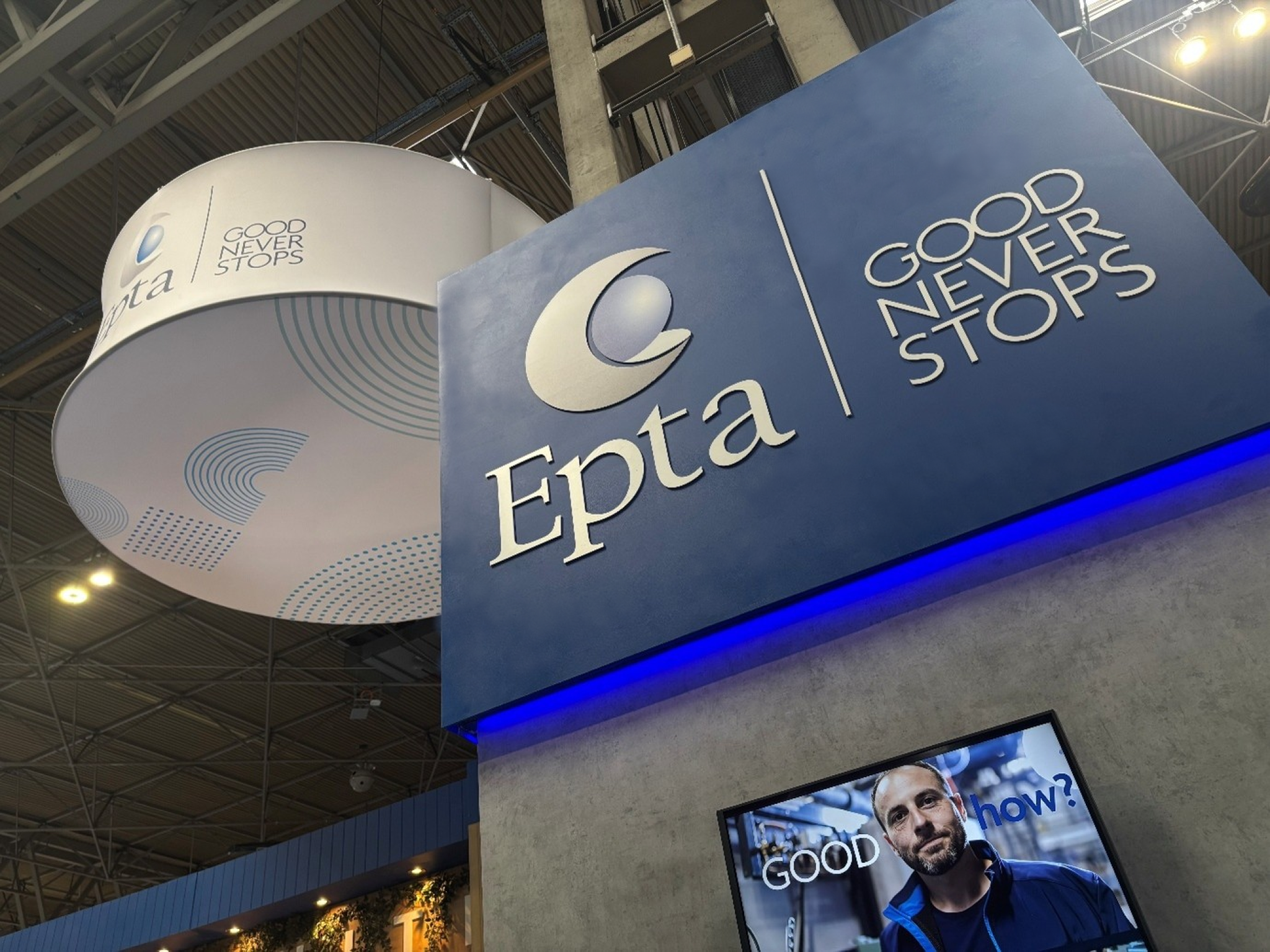
Fresh from a merger with fellow industry powerhouse Hauser and operating under a new ‘Good Never Stops’ corporate vision, the larger-in-size Epta has momentum and wants to lead its sector in the next wave of tech-led, sustainability-influenced innovation poised to transform the retail refrigeration space.
New products
Let’s start with the Zenith. First unveiled to the global retail market at the EuroShop trade show in February 2026 and already in the field in Italy and other European nations, the vertical positive cabinet is an ideal solution for stores of all sizes.

Much like the retail market in general, convenience chains are committed to reducing their environmental footprint – and the new Zenith model promises 28% energy savings compared to previous models. When it was presented to a large audience of industry players and members of the press in Dusseldorf and then again at the National Convenience Show in Birmingham, UK, in March, it drew huge interest.
The ‘invisible’ design allows retailers to hero the product inside it rather than the equipment itself – this is a standout feature. It also comes with an insulated monobloc structure and roof-mounted R290 refrigeration unit installation, essentially meaning reduced maintenance and significant energy savings that deliver lower operating costs.
Jordan Tomes, senior technical lead at Epta UK, says: “In the UK we already have one of the most energy efficient products on the market but this will push the boundaries again.
“The insulation is thicker, and the way we control fan speeds and move air around means we can use less energy. Over a 15-year lifecycle this will reduce the cost of operations for stores in larger retail chains or in convenience.”
Most fridges have a bigger header across the top but Zenith’s window doors can go higher. They put the products “centre stage” while reducing energy usage, Tomes adds.
Other innovations from Epta UK set to help convenience retailers revamp their estates in the coming months include the Eco²Energy Mini Pack which is currently in prototype and is solving an issue impacting many in the trade.
The prototype comes with a scroll compressor, making it ultra energy efficient. It has also been designed to meet the needs of the modern convenience store, where space is at a premium, because it is vertically mounted rather than horizontal.
The engineering means power can be ramped up and down based on demand rather than set at a constant level. Like the Zenith, it is an example of a product helping convenience retailers both run their businesses more efficiency – vital in such a challenging economy – and tick the sustainability improvement box at the same time.
“By making this innovative change, it allows us to bring to market an energy-efficient solution fit for a small footprint store format,” Tomes explains.
“These packs should be viewed as the engine room of the wider fridge systems in a store. For years they have been under-optimised and inefficient, but with inverter-driven compressors, retailers can now use power as and when it is needed, all from a conveniently-sized unit.”
In addition, the energy crises that have hit UK retailers in recent years have resulted in new stores opening with door-closing fridges as standard and a move to retrofit existing equipment with doors. This drastically reduces the power needed in store, making old-fashioned packs unfit for purpose and prompting the need for innovative thinking.
So, what else is to come from Epta UK? The retail market will also soon have access to The Alba, a vertical positive & negative cabinet, and the Tango Ultra, a vertical positive cabinet.

Both are designed with energy efficiency at the core of the engineering process and to drive impulse buys and bring reliability to busy store operations, while helping retailers that deploy the tech reduce their impact on the planet through reduced energy requirements. These are the core pillars of Epta’s new product development in 2026.
New ways of working
It’s not just new Epta products entering the fray; the business is adopting new ways of working that it believes can place commercial refrigeration as a more strategic growth and efficiency driver for retail and convenience chains UK wide. Lots of what the business is doing is echoing the more circular economy principles being adopted by wider retail, too.
And that is important as the sector evolves.
As specialist business property adviser Christie & Co said in its Business Outlook 2026 report published in January 2026, convenience stores continue to move forward. In 2025, larger multi-site operators and corporates selectively divested underperforming stores while focusing on high-footfall, larger locations as well as unveiling hybrid formats blending traditional convenience with on-the-go offerings.
Christie & Co also noted the 2025 emergence of younger, entrepreneurial independent retailers, who are driving more agile and community-led operations based on localised stock selections and operational efficiency.
Tomes says efficiency and sustainability are embedded in how Epta UK is building and maintaining products today. This includes changing its design philosophy to ‘recycle, reuse, reduce and repurpose’.
“We don’t just design products for a single use – we design them so they can be disassembled at end of life,” he says, adding would-be waste materials from the factory floor are now introduced in its product development.
The Zenith comes to market with more metal and less plastic than its predecessor products, for example, while there are also more opportunities for retailers to access retro-fitting services from Epta, where parts are replaced – not the whole unit.
The evaporator in the Alba has been made as small as possible, meaning the frozen display unit can hold 40% more ice creams than previous incarnations of this fridge type.
All of these moves support Epta’s and the retail industry’s desire for cost saving, efficiency, and reduced environmental impact.
“Retailers shouldn’t look at the capital investment when it comes to introducing more sustainable and efficient refrigeration – they should consider the 15-year lifecycle,” says Tomes. “The full calculation shows going ‘green’ is an astute commercial decision in the medium to long-run.”
In addition, Epta UK’s team of 200 field engineers are now trialling Meta glasses. This connected technology means those on the road can be supported by a desk engineer remotely, negating the need for senior staff to accompany newly trained engineers in stores and fast-tracking apprentice training.

New industry direction?
The Meta glasses are an example of AI being embraced on a practical level at Epta UK, but Tomes is leading the charge in terms of future innovations at the company. He is spearheading work alongside competitors and other retail solution providers, as well as special projects in conjunction with academia.
“It’s all about looking at where we’ll be three or four years from now,” he explains.
“It’s important to understand what’s in the market that hasn’t quite surfaced yet. There’s an appetite in the retail industry to push the envelope on new tech, sustainability and efficiency, and we’re making good progress here.”
Working with the University of Bradford, the University of Nottingham, and the University of Kuala Lumpur, Epta is helping give some of the latest ideas around more sustainable refrigeration a commercial testbed. Such work includes exploration around solar-powered refrigeration that runs off-grid but still sustains its cooling capacity, and new thinking in phase change material that could make store equipment more efficient.
Some of the investigations Epta is involved in include looking at the potential of applied AI and data analytics, which could bring more value to control and energy management systems and capture data to ensure retailers are able to make better data-driven decisions about performance and energy usage.
“We believe the modernisation of the commercial refrigeration is not just a nice to have, it’s a commercial necessity – and we want Epta to take a role in leading that evolution and transition,” Tomes notes.
“Why is it important things change? We don’t simply want this sector to be commoditised, it can be so much more – and, as technology changes, we have a responsibility to train the next generation of workers coming through so the sector doesn’t get left behind.”

Tomes says Epta wants to help shape the future of the industry in which it resides, and that will in turn help revolutionise the technology retailers can deploy in their stores. Food waste and food security are major societal challenges, and retailers can play a key part in making a difference but only if they have the support of tech partners such as Epta.
“We’re in a period where commercial refrigeration is viewed as a functional piece of equipment but with all these major issues society faces, we have a duty to make the tech better to help tackle these challenges,” states Tomes.
“We want to give value to customers and our customers’ customers. It’s our ambition to drive the industry forward and we’re calling on the rest of the industry to come and join us on that journey – by using our products or by starting to adopt some of the new ways of thinking we’re embedding into our operations.”
This is an Epta UK advertorial – click here to find out more about the business
[image credits: Epta UK]


