
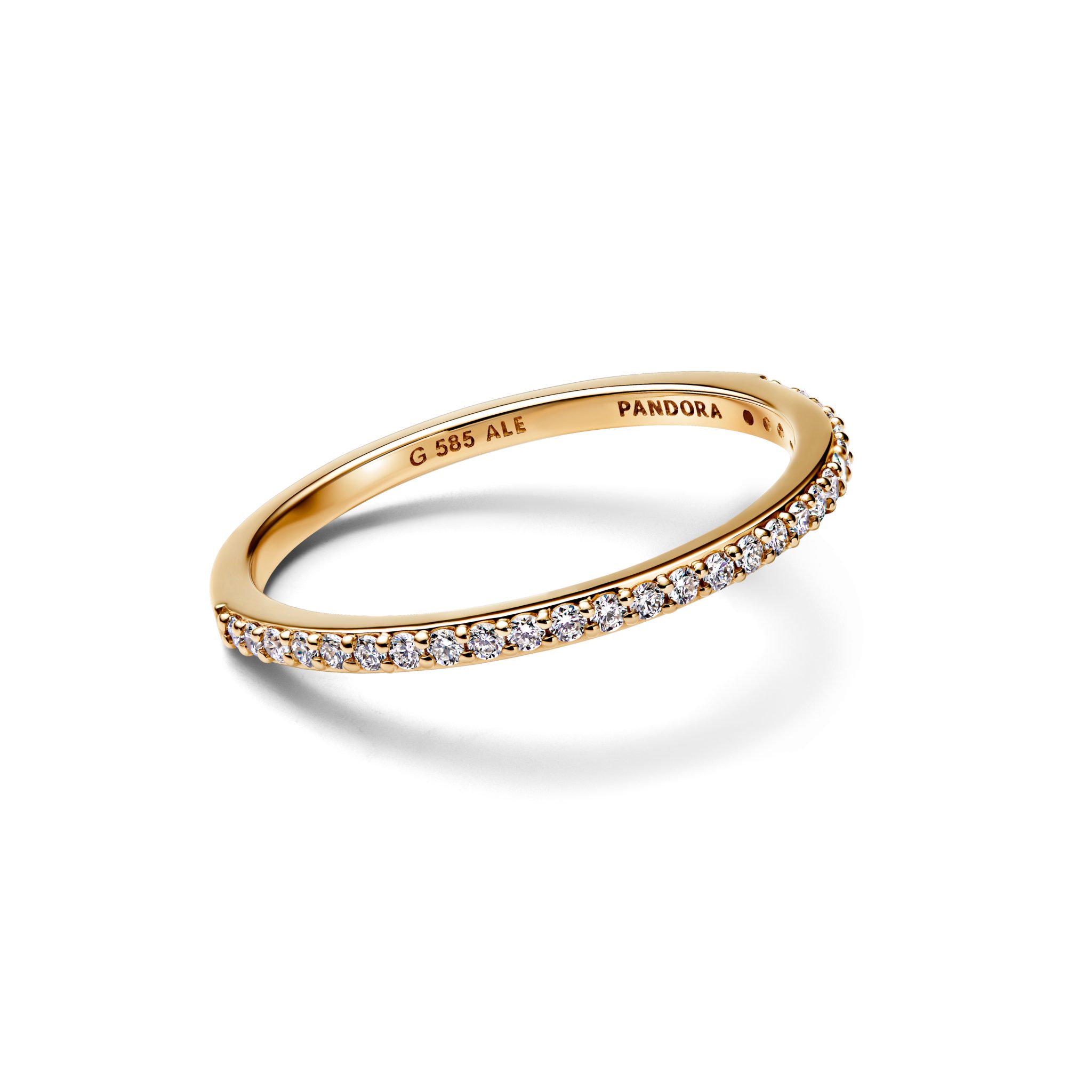

Jewellery retailer and brand Pandora has said it has reshaped the traditional diamond grading system by officially introducing carbon footprint as the fifth ‘C’.
Cut, colour, clarity, and carat are the typical factors taken into account when assessing diamond quality, but Pandora is now set to publish carbon footprint data of every Pandora lab-grown diamond on its website as well.
The aim is to give consumers additional insight into the environmental impact of their jewellery purchases. The carbon calculations cover emissions generated throughout the diamond crafting process, from the production of raw materials used to grow the stones through to cutting and polishing.
According to Pandora, a one-carat lab-grown diamond produces 12.58kg of CO2e emissions – around 90% lower than a mined diamond of the same size.
Berta de Pablos-Barbier, CEO of Pandora, said the move reflects growing consumer demand for greater transparency and sustainability information.
“We believe the future is about making diamonds more accessible while giving customers clarity on what they’re buying,” she said.
“We craft our jewellery with sustainability in mind and by introducing the fifth C, we’re empowering consumers to make informed choices.”
Pandora stopped using mined diamonds in 2021 and it said it now exclusively uses lab-grown diamonds created with 100% renewable electricity. The stones are set in jewellery crafted from 100% recycled silver and gold, which it said further reduces the collection’s environmental impact.
Pandora announced in September 2024 from that moment all its products would be crafted from recycled silver or recycled gold – and at the time it was selling through the remaining inventory containing virgin materials. The retailer views this as an environmental success story but there are those in the industry who question the authenticity of recycled metal claims due to difficulties in tracking provenance, and it remains a grey area from a sustainability story perspective.
Pandora said its approach enables some pieces to achieve a comparatively low footprint. It argued, for example, a 14k gold Pandora infinite ring featuring a one-carat lab-grown diamond has a carbon footprint comparable to that of a pair of jeans.
Pandora noted lab-grown diamonds are chemically, optically, thermally and physically identical to mined diamonds, and have become increasingly popular among consumers seeking lower-impact alternatives and greater supply chain transparency.
Pandora said its carbon footprint data has been calculated by external lifecycle assessment specialists and published in a study independently verified by auditing firm EY. The methodology and findings will also be made publicly available on Pandora’s website.
The company hopes sharing the research will encourage wider transparency across the jewellery sector.
“As consumers demand greater knowledge of how their products are made, transparency is becoming a defining force for brands,” added de Pablos-Barbier. “We are happy to share our learnings with others.”
Pandora lab-grown diamonds are currently available in the UK, US, Canada, Australia and Denmark, with further international expansion planned.
[image credit: Pandora]


