
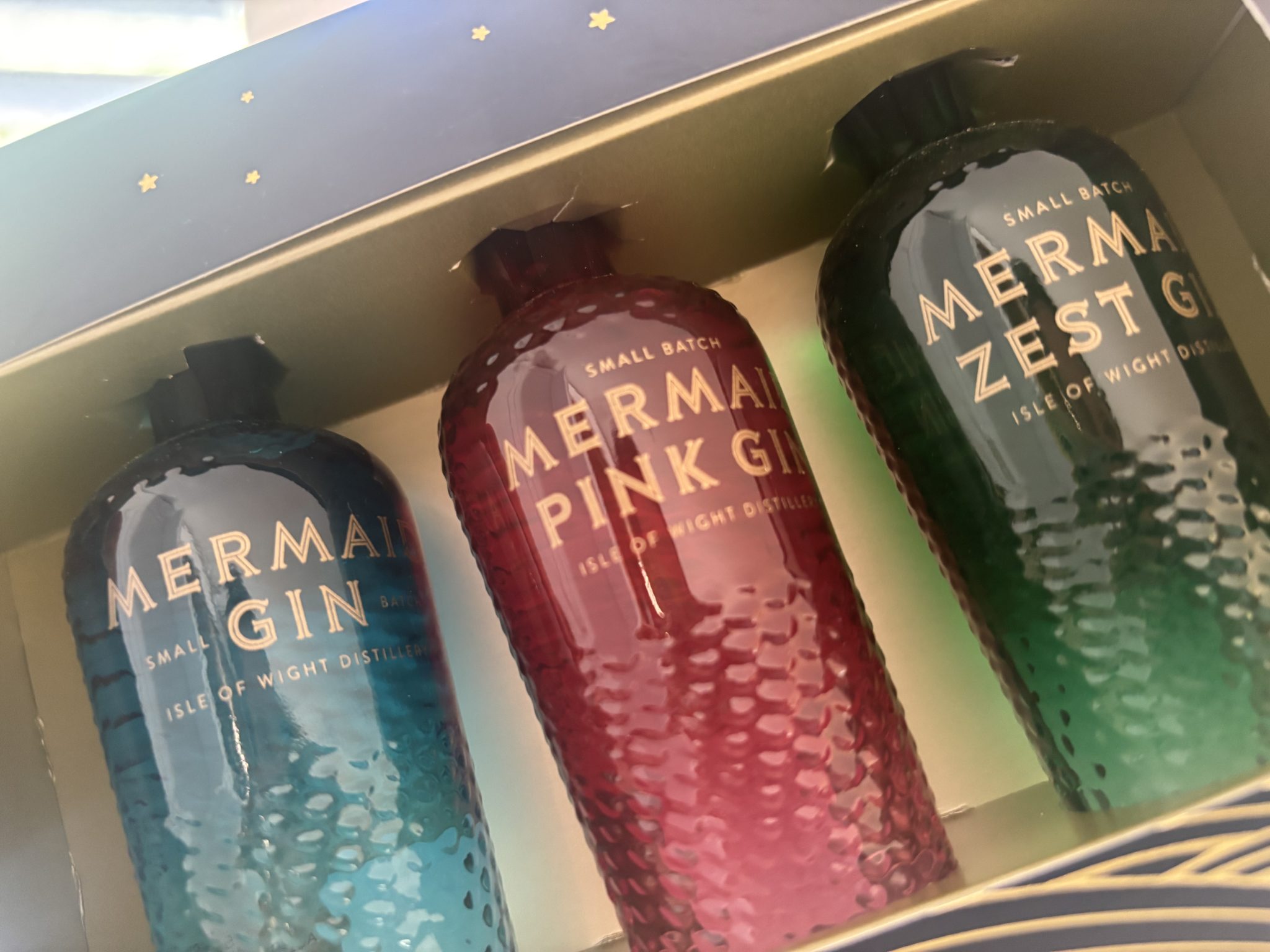

Sustainability is intertwined with the identity of Mermaid Gin maker Isle of Wight Distillery – it has been from the beginning – but that connection is becoming increasingly important as the business grows, according to sales director Malcolm McClellan.

Founded by Xavier Baker and Conrad Gauntlett in 2014, the Isle of Wight Distillery is the island’s first distillery, and it sells products shaped by its surroundings while placing a focus on minimising waste and using ethically sourced and local ingredients.
In November 2022, the distillery became a B Corp off the back of its desire to establish itseld as a business for good, a position supported by early projects in areas such as seagrass restoration and working alongside the Hampshire & Isle of Wight Wildlife Trust work to protect the wild places outside its base in Ryde on the east of the Isle of Wight.
“We did all this initially because it was the right thing to do,” McClellan tells Green Retail World during a private tour of the facilities.
The environmental landscape and the public conversation around it has changed considerably since then. What might once have seemed like niche environmental concerns have become mainstream issues, from marine ecosystems and sewage pollution to plastic packaging and renewable energy.
For the distillery, protecting that environment is now not only a matter of principle but increasingly a business consideration too.
“Protecting that environment is becoming more and more salient,” McClellan says.
“And, importantly, it’s crucial for the health of your business now as well.”
This attitude is evident in the form of heat pumps on the premises used to cool the still and the CFB Boilers equipment installed 18 months ago, which has apparently reduced energy consumption considerably over that time.

A sense of place is a recurring theme for the company, though. The distillery operates in a premium drinks category, with its products sold through a broad range of channels, including independent and national retailers, airports, airlines and cruise operators. Its retail presence includes John Lewis, Sainsbury’s, and Waitrose.
Despite its international ambitions, McClellan is keen to emphasise the importance of its local roots. “You’ve got to have a sense of proportion,” he says. “If you cut the roots off the tree, you know what happens.”
The distillery continues to support local events and maintain a presence in the island community, even when the commercial value may be difficult to quantify.
“I got back from Singapore at 3pm and was raising merry hell on the M3 because I needed stock, tablecloths and tasting cups,” McClellan recalls, describing the demands of an event back on the island after international travel.
For him, those local connections matter because they provide perspective in terms of where the business began. “We look after the locals as well as we look after the tourists,” he says.
Packaging with purpose
Packaging is another area where the distillery has been looking to reduce its environmental impact, while also maintaining the premium positioning of its products.
For one, the bottles it uses to contain its signature Mermaid Gin and other products such as Mermaid Spiced rum and Mermaid Salt Vodka, are made in Italy using Venetian glass.
While this isn’t a sustainability play per se, the perceived beauty and durability of the bottles means they are creating a secondary market. On peer-to-peer marketplaces such as eBay, the empty bottles will fetch a good price for sellers as they have become collectors’ items, while the restaurants and bars selling the product will regularly repurpose the empty bottles as decorations and candle holders.

The company has also developed packaging using mushroom mycelium, replacing conventional materials for some products. The mycelium packaging was launched around a year ago for a gifting range, and forms part of a wider effort to rethink how premium spirits are presented.
It is a particularly relevant challenge for a drinks producer operating at the premium end of the market, where bottles are frequently sold as gifts or presented in boxes containing additional glassware and accessories.
The traditional approach can create significant quantities of packaging, much of which has little useful life beyond the point of purchase.
For McClellan, sustainability therefore has to be considered alongside the practical realities of the business.
The distillery is growing: production is approaching 10,000 big bottles and 2,000 minis sold a week, with the business aiming to reach around one million bottle sales a year. International markets, particularly North America and Asia, are an increasingly important part of that expansion.
That makes the environmental impact of the premises and its operations an increasingly significant consideration.
The next site
The biggest opportunity could come with the distillery’s proposed future site, which is currently being identified.
McClellan describes sustainability as an important part of the thinking behind the plans, particularly around renewable energy and the design of the premises which have yet to be secured.
The intention is not simply to bolt sustainability measures onto an otherwise conventional building. Instead, the ambition is for environmental features to be visible and integral to the site itself.
“If we get a lot of visitors, and they’re even more numerous at the bigger site, when they drive in I want them to see the solar panels,” McClellan says.
He envisages renewable energy infrastructure being an obvious part of the visitor experience rather than something hidden away behind the building.

That visibility is important to McClellan because the environmental investment needs to have several functions. It should reduce the site’s environmental impact, make financial sense over the long term, and demonstrate the distillery’s sustainability credentials to visitors.
“This approach is financially motivated as well as logical,” he says. “Once you’ve committed the capital investment, you will see a financial gain as well as sustainability gains [on projects such as these].”
Renewable energy is therefore being considered not simply as an ethical investment but as part of the long-term economics of the business.
The proposed site – which we now know won’t be in the old ice rink on Ryde seafront because the location was ruled out in 2024 after the business initially revealed plans to acquire and take on the venue – would also provide an opportunity to rethink the physical infrastructure required as the distillery continues to expand. The existing operation is spread across the main bar, shop, and distillery site and several additional warehouses, with different buildings used for production, storage, and packaging. Indeed, Green Retail World explored one of the warehouses where box upon box was crated up, ready to be sent to Germany.
As volumes increase, consolidating and designing those operations with energy efficiency and sustainability in mind should have a material impact, according to the sales director.
Sustainability and growth
The challenge for the distillery is that sustainability has to operate alongside a growing international business.
The company is targeting significant production volumes while operating in a premium category where packaging, presentation, and brand positioning are important commercial considerations.
McClellan acknowledges the drinks market is operating in a challenging economic environment, but says the business continues to benefit from its premium positioning and the breadth of its distribution.
That breadth also provides some resilience: the distillery is not dependent on one particular sector, with sales spanning hospitality, independent and national retail, travel and international markets.

But growth inevitably brings environmental questions with it. For the Isle of Wight Distillery, the next stage will be about ensuring that expansion does not mean leaving its original environmental principles behind.
The company’s early involvement in projects such as seagrass conservation reflected a commitment to the island and its surrounding environment before sustainability became a mainstream business concern. Today, the same philosophy is being applied to packaging, energy and the design of its future premises.
And with the American Distilling Institute awarding its highest honour, the prestigious International Bubble Cap Award 2026, to the Isle of Wight Distillery just one week before Green Retail World’s visit to the site, the future looks bright for the small island-based business with global ambitions.
This feature is part of a summer series exploring environmentally-minded businesses based in the Isle of Wight. Look back on the site for Green Retail World articles, or ‘GRW in IoW’ coverage, focusing on Teemill, Isle of Wight Tomatoes, and The Garlic Farm.
[image credits: Green Retail World]


