

A series where we hear from retail’s movers and shakers about how they are tackling the challenge of becoming a greener business in an industry that is far from green – assessing organisational change, eco initiatives, and much more.

Inclusive fashion retailer Lucy & Yak is on a growth mission – and it recently opened the doors to its 16th UK store (2 May), in Islington, London.
The retailer, which operates with a strong environmental message, already runs shops in Brighton, Bristol, Cambridge, Canterbury, Norwich, Nottingham, Manchester, Cardiff, Exeter, Chester, and Edinburgh, as well as running outlets in Castleford and Portsmouth. It also opened a location in Sheffield in March, as covered by Green Retail World (GRW).
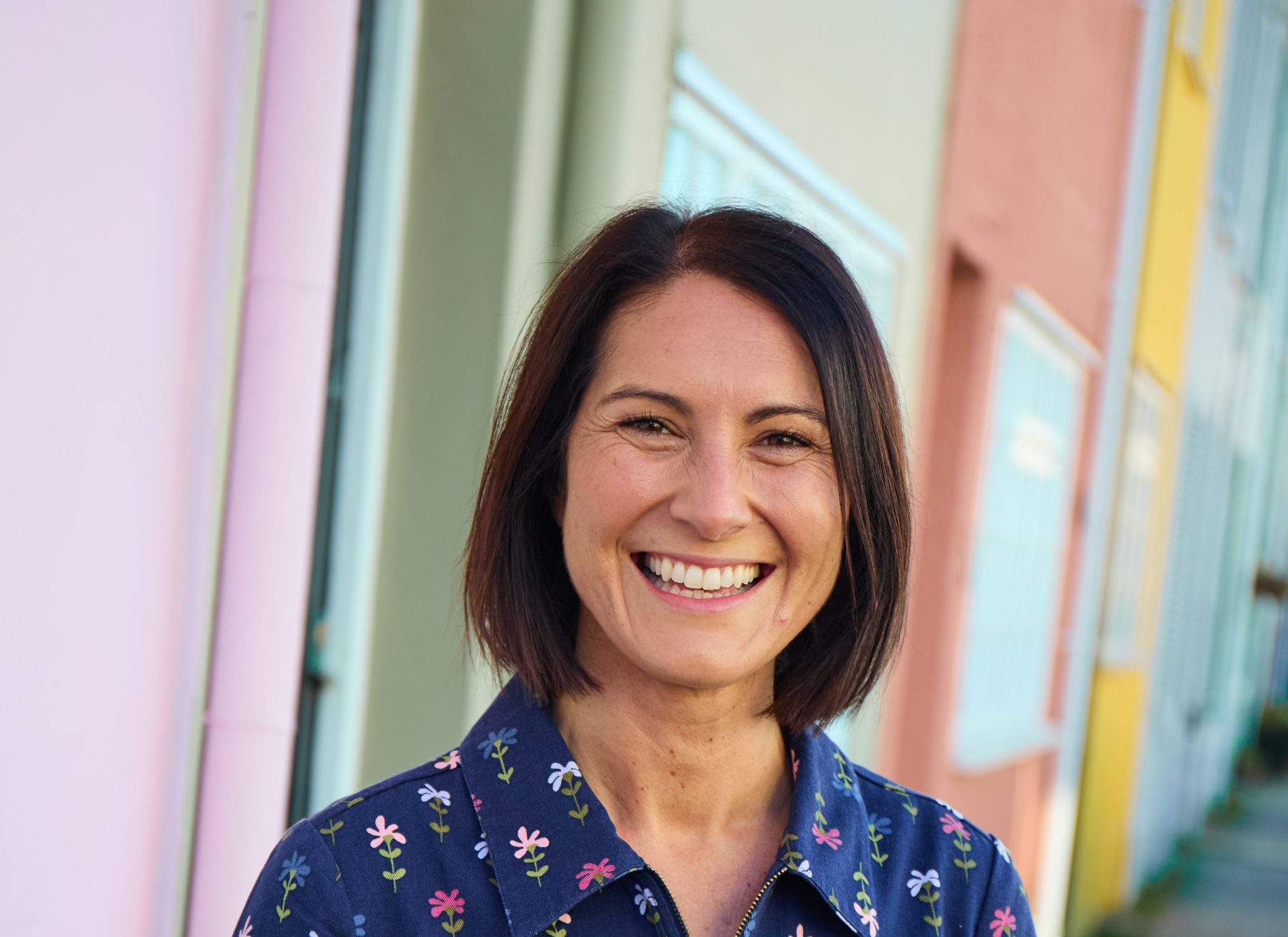
With new stores opening, there is significant momentum at the nine-year-old business which achieved revenue of £33 million last year. But commercial growth and sustainability best practice don’t always go hand in hand, as managing director Lydia Coley (LC) describes to this publication in our latest Seeds of Change interview.
Earlier this year, Leena Norms, a British poet, vlogger and influencer with 60,000-plus Instagram followers, who used to partner with the brand, published a social media piece entitled “Why I quit Lucy & Yak as a customer and influencer”. In the takedown, Norms questioned the quality of fabrics used by the brand and argued it had moved away from its sustainability and product longevity roots.
We were pleased to get a candid response from Coley to the online criticism and to hear what the future holds for a brand that has brought the feelgood factor to so many customers in its near decade of existence.
GRW: You’re approaching ten years since inception. To what extent has Lucy & Yak’s commitment to sustainability and inclusivity been a driver of the brand’s growth in that time?
LC: Lucy & Yak was built on genuine principles of sustainability and inclusivity that came from the hearts of our founders. I think our community could feel that it was real, rather than just a marketing gimmick. When something is genuine and authentic, people are attracted to it naturally and I think this is where much of our rapid growth has come from these last nine years.
GRW: What are the key pillars of the business’s sustainability/environmental strategy?
LC: Circularity. Businesses that produce a product MUST be responsible for the lifecycle of that product. That is our mission. How do we keep every piece we make in circulation for as long as possible and not be another business making profit whilst filling landfills, it’s got to stop!
That’s why we pioneered ReYak. We buy back every Lucy & Yak, in any condition. You’ll get £25 for any Lucy & Yak dungarees; we don’t even look at the condition when you bring it back, we just give you the voucher, let us deal with the piece. It then goes one of three directions…
- Straight up for sale as a ReYak PreLoved piece.
- Up to our ReYak studio in Barnsley where our incredible seamstresses Cat and Sam will repair it or upcycle it and return it to stores for sale.
- This is probably my favourite piece and actually took us ages to find the right place. We send it to our partner Bright Recycling in Yorkshire which has an innovative initiative called ‘Recodog’ who use it as stuffing for pet beds. Brilliant.
Further up the supply chain, all our cotton pieces are organic cotton, GOTs or OCS-certified, and our recycled polyester is GRS certified, which l feel should be the bare minimum of a clothing brand in 2026.
GRW: Tell us about your factory in India and why it is a symbol of Lucy & Yak’s status as a socially conscious enterprise? Any new developments there and in the wider supply chain?
LC: As we’ve grown we’ve taken on more factories, as you would expect, but we’ve worked with Kunal Balar at Herbal Fab from almost day one. He has a wonderful factory in Ahmedabad that we’ve watched and supported to grow in these last nine years. Kunal is an inspiration when it comes to sustainability and working conditions. He actually influenced much of our early journey on sustainable fabrics. We visit twice a year and he’s actually visiting us in Brighton in a few weeks, I would highly recommend talking to him about sustainability in India, he’s a wonderful person.
GRW: What are the latest financials you can share? How has the revenue/profit increased in recent years?
LC: Revenue last year was £33 million and will be a little higher this year. It’s been an incredibly difficult few years for everyone, we’re all watching what we spend and costs everywhere are going up, and we aren’t immune to that. So we’ll break even this year and continue to ride this financial storm until the clouds clear and the world returns to some sort of normality, hopefully soon.
GRW: You’ve come in for some online criticism in recent months – specifically related to product quality and a change in packaging policy. Why do you think this has happened and what’s your reaction to it all?
LC: Yes, a few things happened actually. In our search for better, more sustainable fabrics, we tried some hemp blends, which unfortunately didn’t stand the test of time, so we learned a lesson there. We also moved our garment tech team from Barnsley to be with the rest of the product team in Brighton. Garment techs cover quality control. In the transition, some products slipped through that maybe would have normally been picked up.
We’re also trying to spread our supply chain risk. It’s good practice to have factories in multiple countries in case there are issues at a country level that affect production. We’ve been onboarding factories in Turkey and Vietnam and you often get teething problems with new factory relationships.
A bit of a perfect storm, but the team have been working incredibly hard following the feedback, listening, and learning to improve where we didn’t get it right. There was some confusion around packaging. We have always sent pieces individually wrapped in plastic, using a paper mail packaging. In the early days, we also put pieces in recycled sari bags as an additional little touch. When costs got tight two years ago, we decided to stop sending the sari bags. This left some feeling disappointed and gave some the impression that we’re just about profit, because sari bags weren’t essential, but they were nice to have. We now have an option on the checkout for customers to receive a free sari bag with their order.
GRW: From your social media response it appears you’re addressing some of this criticism… What will it take to get some of those vocal critics back on side, and how important is it that you do get them back on side?
LC: We don’t want anyone to feel let down or disappointed and we want everyone to feel welcome and included, and that we are a brand that authentically speaks to them and is for them. I would love to win everyone back and that is our goal. We have an amazing team and we are always trying to do the right thing, and I know they will see that again over time.
GRW: How difficult is it for a brand to maintain its original principles and purpose as it grows over time?
LC: It’s very challenging. Sometimes the most sustainable option is at odds with the best business decision. You’re always balancing the two, sometimes you’ll go too far over one way and the other suffers and sometimes you’ll go too far over the other way and the other side suffers. It’s a difficult path to tread, but it’s the right path. Our strong principles and values are the DNA of Lucy & Yak, they will always be maintained regardless of our size.
GRW: Talk to us about the circular economy principles of Lucy & Yak? What plans are there for the resale/repair services to evolve and grow over the coming months – and how important is that to the overall success of the business?
LC: As I said earlier, circularity is our priority now, we’re going to keep expanding ReYak. We’re currently reviewing what we pay for each item with a view to some increases so that remains an attractive option for our community. We are also working on something huge to add to ReYak, which it’s just a month or so too early for me to talk about, but if we pull it off, it’s going to change the game! Watch this space.
At Green Retail World, we are giving retail executives and industry leaders, like Lydia Coley, a chance to explain how they are enacting environmental change within their organisations. Please contact editor, Ben Sillitoe, if you’d like to put yourself forward for an interview on this key subject. Sharing good practice can help the wider sector move in a positive direction.
[image credit: Lucy & Yak]


