

A series where we hear from retail’s movers and shakers about how they are tackling the challenge of becoming a greener business in an industry that is far from green – assessing organisational change, eco initiatives, and much more.

First things first, the Seeds of Change slot is usually an exclusive Green Retail World interview. But we’ve made an exception on this occasion following an appearance from Harrods’ supply chain director, Simon Finch, at last month’s Retail Technology Show (RTS).
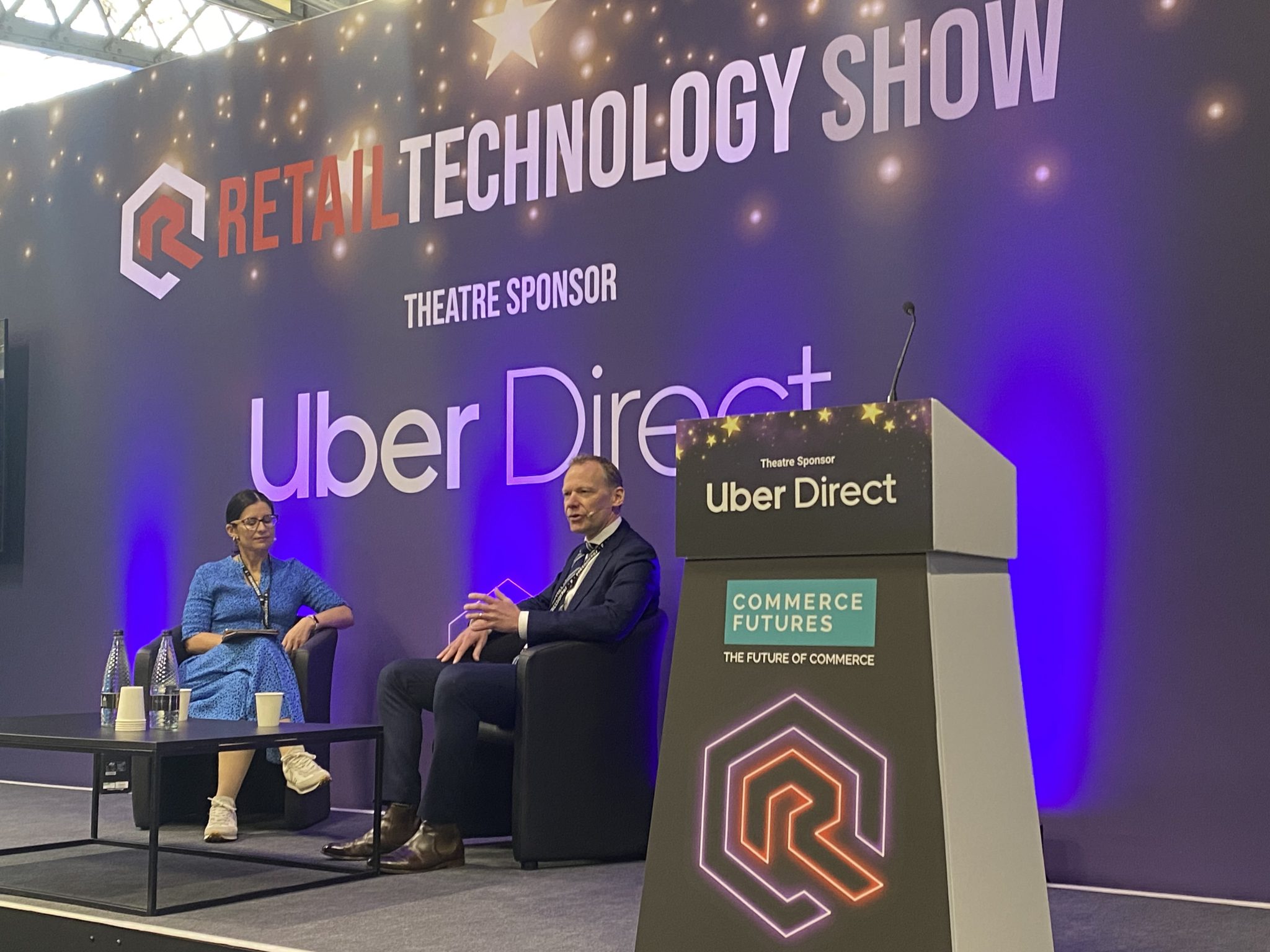
Interviewed by the fantastic event host and long-time retail analyst, Natalie Berg, on stage at the London expo and conference, Finch painted a vivid picture of the sustainability journey Harrods is undertaking. From collaboration with competitors to renewable energy installation, and much more in between, Harrods has got an interesting – and inspirational – story to tell.
We’ve picked out the key talking points from Finch’s interview with Berg on 25 April.
Hello HVO, goodbye diesel
Finch talked RTS delegates through some of the supply chain sustainability work Harrods has embarked on. In 2020, the delivery fleet – or the “little green vans” as Finch called them – was electrified. A year later, Harrods’ distribution fleet began being powered by hydrotreated vegetable oil (HVO), which promises 90% fewer emissions than diesel.
The move to reach this point involved collaboration with logistics providers and, remarkably, Harrods’ competitors, according to the supply chain director.
Finch noted HVO is approximately 10% more expensive than diesel and Harrods’ need for circa 200-300 litres of fuel per year is relatively small compared to some business fleets, so the only way to offset those costs was to collaborate.
“We got together with a consortium of around ten of us – four other retailers – and we pooled our usage,” he said.
“By doing this we could get the buying power to buy HVO at a competitive rate.”
The department store group’s fleet partner was making the step to HVO and approached Harrods about the combined buy, explained Finch.
“They facilitated their other customers, bringing them to the table. Then we were able to introduce some further customers too. We got up to two million litres by bringing people together and we removed a 10% premium blocker by doing that.”
Renewable energy generation has fallen into focus for the business of late, too, and in 2023 the roof of Harrods’ Berkshire distribution centre (DC) was covered in solar panels.
Finch called this scope 2 work a “huge and difficult project”, particularly with the costs of infrastructure going up. But the site went live in September.
“That month we were generating more power from our solar panels than we needed as an organisation so we passed green energy back to the grid,” he explains.
Come together
Finch recognises retail is a competitive industry, and with the economy and consumer sentiment providing a “pretty tough” backdrop to doing business right now, companies do not want to miss an opportunity to find a competitive advantage over their rivals.
“But at the same time if we don’t work together then we can’t drive that agenda,” he said of sustainability strategy.
The HVO switch is a prime example of competitive businesses coming together for the good of their bottom line and the planet – and Finch said the fuel consortium involved getting people “we wouldn’t usually talk openly to in a room together” and claimed it would not have happened four or five years ago.
Things are changing, it seems, and Finch identified several other areas where the wider retail industry must collaborate in the name of sustainability.
“No-one can go alone, you have to collaborate, work with partners and work together,” he said.
“The journey we have set out is very much about how can we work together, how can we collaborate, how can we drive better practice throughout the end-to-end supply chain which will help our scope three.”
Finch added: “Actually from a supplier perspective it’s their scope one and two. You could argue that if everyone in the world dealt with their [scope] one and two then actually none of us need to do anything about our scope 3.”
Harrods and Burberry, one of the retailer’s suppliers, have worked together to forge a system that provides both business cost benefits and sustainability gains.
A Harrods online shopper in the US can buy one of the brand’s famous trench coats, or many of the other Burberry items listed on the Harrods website, and it will be shipped directly from the Burberry DC.
“Actually that coat originally would have come from SW1 and shipped to the US with all the delays and costs that go to the customer,” Finch noted.
“Now it comes from the Burberry warehouse which is actually in New Jersey.”
He continued: “It’s about looking at those opportunities where we don’t have to make the decision between sustainable or [lower] cost because actually you can have both. That’s where we need the innovation, creativity, and cooperation – if we can harness that it’s a win, win.”
Harrods is working with luxury retail body Walpole and standards organisation GS1 UK, with Finch saying these groups can help foster collaboration and bring people in the industry together, but he warned retail is not that joined up yet.
He used Ralph Lauren as a hypothetical example. “If Harrods is asking them one thing and Selfridges and Harvey Nichols are asking for something slightly different we’re not helping them help us – that’s where I think the miss is at the moment.”
Long and winding road
So, Harrods has made some positive progress in tackling its own emissions, but Finch is aware the most difficult sustainability work is still to come, acknowledging scope 1 and 2 account for around just 4-5% of the retailer’s emissions.
“Although we’re proud of it [what Harrods has done], there is a huge way still to go,” he noted.
“Our biggest contributors to our emissions are the sourcing and production, and the upstream transportation of the products we sell and the end use of those products,” he explained, adding that Harrods’ aviation business sells fuel which is, therefore, “challenging from a scope 3 perspective”.
Finch observed there is a “nervousness about talking about sustainability” from a business community perspective but calls for more organisations to be “honest” and continue to talk about it. Only then will solutions emerge to help solve some of the huge problems the planet faces.
Like most major issues in society these days, there are directly opposing camps in the sustainability debate. There are those, such as Finch, who are alert to the challenge and embracing it by shaping strategy with the view to a decarbonised future but there are still others who bemoan the costs of making business more sustainable.
Finch said: “True sustainability is about doing things more efficiently, moving things less distance.
“Lots of businesses view this as a cost line but shouldn’t – it should be an opportunity to improve operations, deliver innovations, and be more creative about what we’re doing. And there are lots of examples of that.”
He added: “Really understanding it and viewing it as an opportunity is how we need to talk about it.”
That’s what Harrods is doing. And it’s helping deliver some positive results so far.
Other Harrods sustainability work of late includes partnering with food waste prevention app Too Good To Go to ensure opportunities for short-life bakery and fresh food to be sold for a discount to consumers. It has also removed its green and gold plastic bags and replaced them with paper versions – the old plastic bags have been processed and the materials used to make picnic tables and benches situated at the retailer’s DC.
Faulty but functioning returned products are now donated to local charities or resold to gain another income stream. Harrods’ H Beauty stores are also offering beauty packaging recycling collections in association with MYGroup.
Lots already done, even more to do. Finch seems up for the challenge.
At Green Retail World, we are giving retail executives and industry leaders a chance to explain how they are enacting environmental change within their organisations. Please contact editor, Ben Sillitoe, if you’d like to put yourself forward for an interview on this key subject. Sharing good practice can help the wider sector move in a positive direction.
[Image credit: Green Retail World]


