
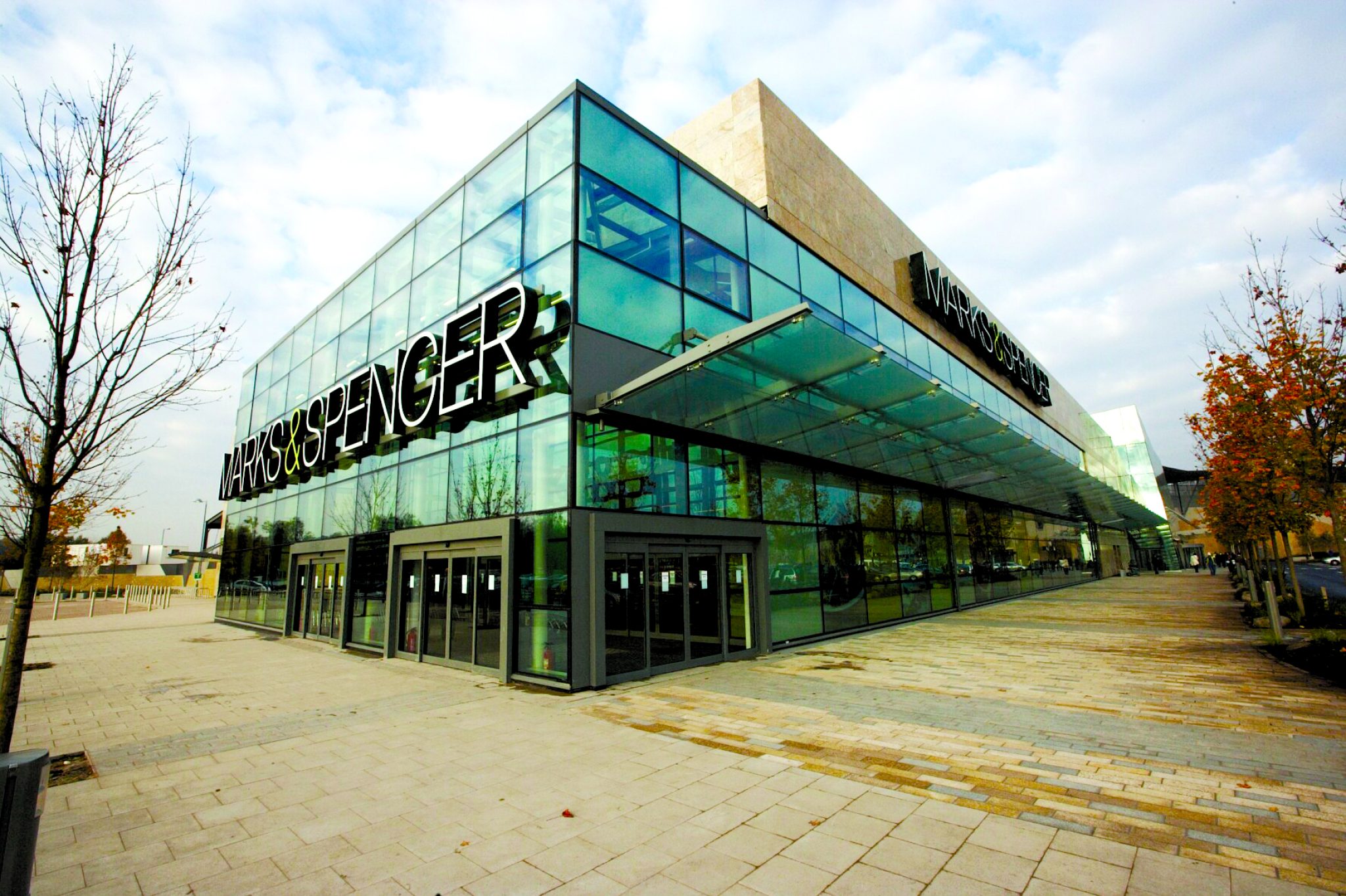

Marks & Spencer (M&S) has announced it will be trialling multiple projects backed by a new M&S Plan A £1 million accelerator fund.
One of the early initiatives supported by the fund will see M&S customers encouraged to donate their unwearable clothing to Oxfam where these items can be cleaned and used to support “fibre to fibre recycling”. Garment fibres can be re-used and turned into new material, preventing them going to landfill and supporting a more circular fashion economy, according to the retailer.
Separate to the wider M&S Plan A fund, the retailer also revealed today it has invested £1 million in helping change the diet of pasture-grazed cows in its milk supply chain. The idea behind the move is to reduce the amount of methane produced in a cow’s stomach and therefore released into the atmosphere.
Working with all its 40 M&S Select Dairy Farmers, the retailer has projected it can save 11,000 tons of greenhouse gas emissions from the atmosphere annually.
Elsewhere, a new M&S trial will deploy artificial intelligence to predict a store’s optimal heating, ventilation, and air conditioning (HVAC) controls – with the findings used to reduce energy consumption. Trialled across six stores, the scheme is looking to help M&S reduce HVAC costs by up to 30% and could save an estimated 2,000 tonnes of carbon and around £3 million annually if rolled out, M&S said.
Further projects in the pipeline centre on energy, recycling, technology and water. Imminent recycling schemes include placing Polytag technology on food products to better understand how much, when, and where M&S-branded plastic packaging is recycled, as well as explorations in how to implement shoe recycling.
Stuart Machin, M&S CEO, said: “I talk a lot about the ‘magic of M&S’ – and a key part of this is our commitment to innovation.
“It’s in our DNA and, along with our unique model of own brand, long-term supplier partnerships, it’s how we deliver the quality and trust our customers expect from us. By turning our obsession with innovation towards climate change and tapping into the entrepreneurial spirit of our suppliers we can turbo charge our drive to be a net zero business across all our operations and entire supply chain by 2040.”
M&S is not the only retailer addressing methane emissions in its supply chain in innovative ways – check out Waitrose’s work to capture cow dung to help power tractors.
[Image credit: M&S]


