

Those of us fully behind the sustainability agenda and who believe retail as an industry needs to continue to find ways to move from light green to dark green in its thinking on climate and planetary matters now have some more evidence to support our cause.
For anyone still uncertain about the value in adopting more sustainable practices and operations, they only need to take a look at the fantastic Unified Commerce for Specialty Retail in Europe 2024 benchmark report, which was published by Manhattan Associates on 5 March.
Amid the plethora of findings on what makes a sophisticated and successful retailer from a tech and customer proposition perspective was a business case for sustainability being put at the heart of overall strategy. I’ve picked out five key points from the report – produced in partnership with Google Cloud and Zebra – that explain why.
Unified commerce leaders are strong on ESG message
Those retailers rated as leaders in search and discovery make shoppers feel good about their purchase decisions, according to the report.
Leaders go beyond describing product features by immersing shoppers in the brand’s ethos. There is a greater purpose in their storytelling, getting shoppers to buy into their vision for why their way ticks all the boxes for the consumer, the business, and the wider world.
100% of leaders in this space publish detailed content on sustainability practices.
Brands and retailers need to avoid greenwashing of course – the new EU Green Claims Directive, as well as the Competitions and Market Authority and Advertising Standards Authority in the UK are rightly policing that – but authentic messaging on sustainability sells.
100% of leaders are hot on sourcing info
All of the leaders in the search and discovery category put sourcing information on the product description page, while 80% of them publish environmental, social and governance (ESG) metrics on their websites.
Indeed, looking at the industry more widely, there is an increase in the transparency retailers are displaying. Customers and the regulators are demanding it.
As businesses of a certain size are mandated to report on their carbon emissions annually, they will hopefully have even more positive planetary progress to share along the journey – and Manhattan’s report suggests retailers would be wise to promote it.
More sustainable fulfilment wins hearts of consumers
Benchmark report leaders show fulfilment excellence by combining sustainable practices and adaptive order management: these two things often go hand in hand in retail.
I’ve written on this blog – and for Manhattan’s blog – before about how sustainability starts with efficiency. And efficiency in fulfilment (i.e., avoiding missed deliveries or trying to reduce customer returns) is all about flexibility and reducing unnecessary carbon miles in the despatch and collection of orders.
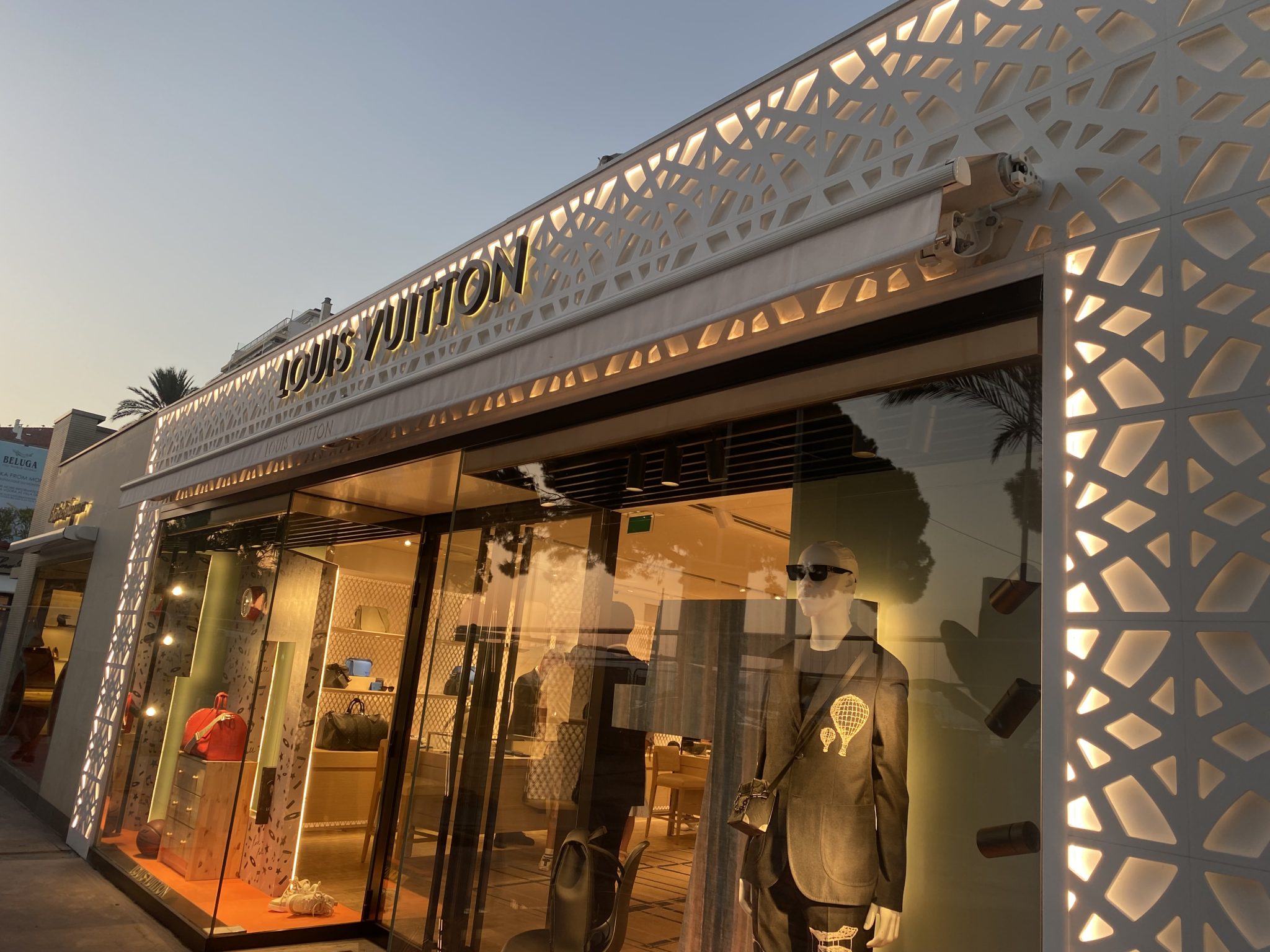
Leading players identified in the report, including Louis Vuitton, allow shoppers to redirect buy-online-pick-up-in-store orders to home in case they are unable to pick it up from the shop – they also ship using sustainable packaging.
According to the report, 40% of shoppers prefer the option to change fulfilment method post order confirmation or even after shipping has begun, while 64% of shoppers are more likely to buy from brands that offer sustainable product packaging.
Customers willing to spend more for sustainable goods
Although what customers say they want and how they act are not always aligned, it is difficult for retailers to ignore one stat in the report: 40% of shoppers are actively looking for, and willing to spend more for, sustainable and ethically sourced products.
Only 27% of consumers are satisfied with their preferred retailer’s sustainability practices, though, which indicates that shopper pressure on brands to be greener and more ethical is only set to intensify in the years ahead. Surely, one of the main reasons why retailers should act accordingly.
Leading quartet are active in sustainability conversation
Of the 50 retailers benchmarked in the report, four brands emerged as overall leaders in unified commerce: Adidas, H&M, Leroy Merlin and Marks & Spencer (M&S).
It just so happens all are vocal on the sustainability agenda. In February, Adidas aligned with not-for-profit organisation Canopy to ensure its textiles, paper, and paper packaging does not contain fibre sourced from climate-critical forests, while Leroy Merlin parent ADEO is an active member of a trade association-led taskforce aimed at helping retailers in the DIY industry reduce its scope 3 emissions.
M&S has been a leader in the drive towards more sustainable retailing, with its Plan A initiative – although tweaked and refined over the years – one of the first substantial retailer strategies putting people and planet on a par with profitability as a business priority.
H&M Group, meanwhile, is a rare example of a big retailer to promote its sustainability boss to CEO. Although Helena Helmersson resigned in January 2024, she spent four years in the role as a dark green advocate leading H&M’s decision-making processes.
As the benchmarking report shows, leaders in unified commerce are agile in their operations, joined-up across their sales and customer channels, and willing to embrace new technology. They are also quite clearly tuned into the ESG agenda, which to me underlines the business case for sustainability in modern, unified commerce.
Sign up for Green Retail World’s newsletter here, or follow us on Twitter @GreenerRetail.
Ben Sillitoe, editor, Green Retail World (@bsillitoe)
[Image credit: Green Retail World]


