
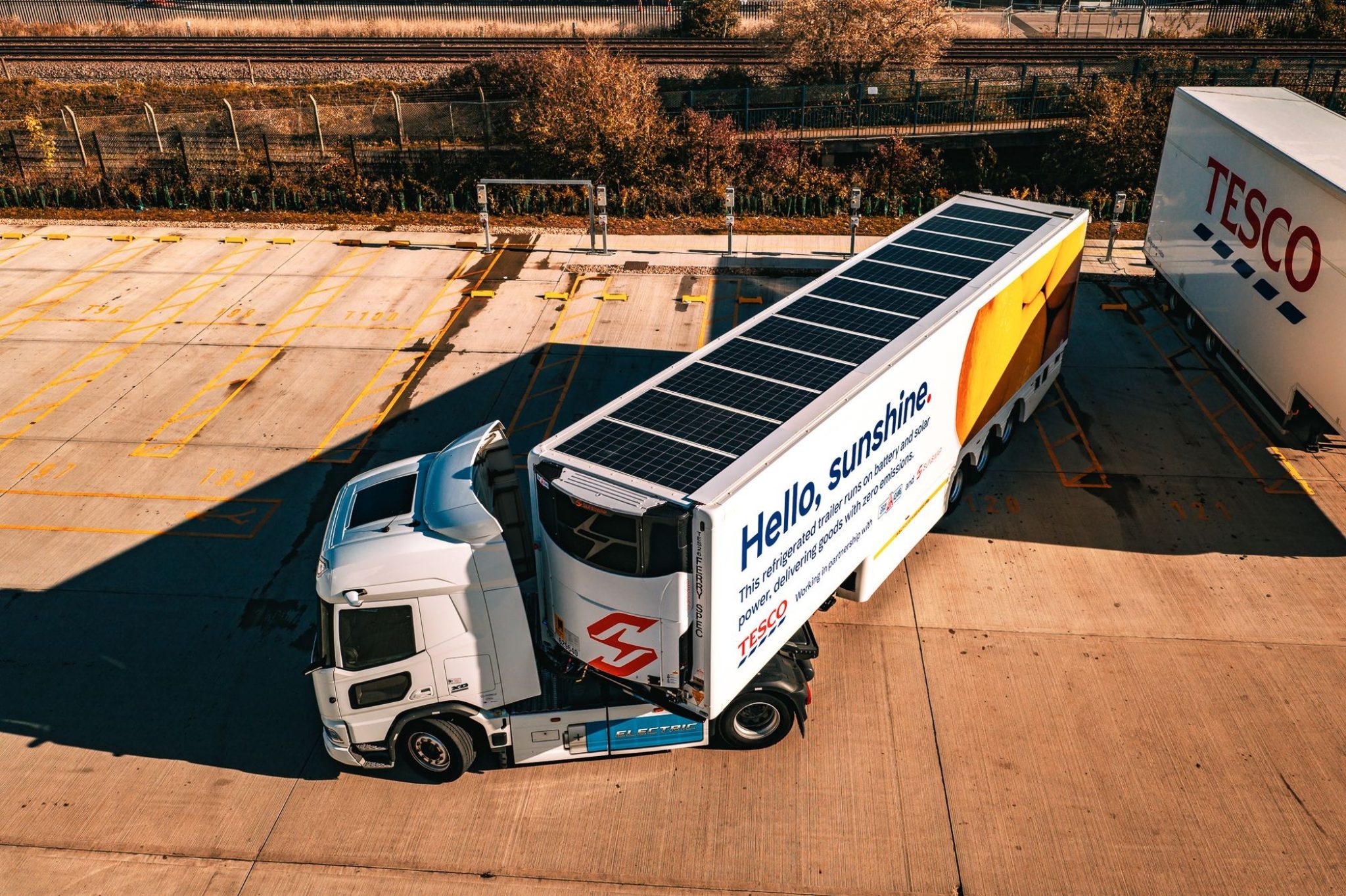

Tesco is doubling the number of battery and solar-powered fridge units operating across its refrigerated trailer fleet, following the successful integration of its first five units last year.
The retailer is looking to reduce emissions from its transport operations, and views this technology as a way to support the mission.
The supermarket chain is adding five Sunswap ‘Endurance’ units to its fleet, taking the total to ten. The original five have been operating from Tesco’s Peterborough distribution depot since February 2025, while the additional units will be deployed at its new distribution centre in Aylesford.
The expansion represents a further step in Tesco’s efforts to decarbonise its distribution network, supporting its ambition to achieve net zero across its own operations by the end of 2035 and throughout its value chain by 2050.
Sunswap Endurance is an electrically powered transport refrigeration system combining battery technology with trailer-top solar panels. Designed as an alternative to conventional diesel-powered refrigeration, it aims to deliver the operational performance required by large retail distribution fleets without relying on fossil fuels.
The technology is being used on Tesco’s triple-temperature trailers, which transport fresh, chilled and frozen products in separate compartments at different temperatures during a single delivery journey.
The ability to maintain three distinct temperature zones using an electric refrigeration system demonstrates the potential for battery-powered technology to support complex grocery supply chain requirements, according to Sunswap.
Battery and solar-powered fridges: Tesco trials new tech on trucks
Sunswap worked with trailer manufacturer Gray & Adams to integrate Endurance into Tesco’s fleet, ensuring the equipment met the retailer’s operational specifications. The units operate within existing delivery arrangements, requiring no changes to routes.
Quieter operation is another benefit, particularly for deliveries into towns, cities and residential areas, where conventional transport refrigeration can generate significant noise.
Connected technology also provides Tesco’s fleet team with visibility of refrigeration performance, energy consumption and unit utilisation, helping the retailer assess how the equipment performs in everyday operations.
Michael Lowe, CEO of Sunswap, said doubling the fleet reflected the confidence built through real-world use, adding that the company wanted to develop its technology alongside customers by learning from operational data.
Cliff Smith, fleet engineering manager at Tesco, said: “Expanding our fleet with innovative technology is one way we’re making progress. Following the successful integration of our first five Sunswap units, we’re adding five more trailers to help make deliveries even more efficient, allowing us to transport fresh, chilled and frozen products at different temperatures in a single journey.”
Ryan Mazgaj, sales manager at Gray & Adams, said the companies had worked collaboratively to integrate the technology without compromising the operational specification required by Tesco.
[image credit: Sunswap]


