


Amazon has opened a £40 million delivery station in Stockton-on-Tees in the UK, which it said sets a new benchmark for lower-carbon logistics buildings across its global network.
The facility is the first building in the company’s worldwide estate to pursue the latest version of the Living Future Institute’s Zero Carbon Certificationv. It has been constructed to the UK Net Zero Carbon Buildings Standard, with measures designed to reduce emissions from both construction and day-to-day operations.

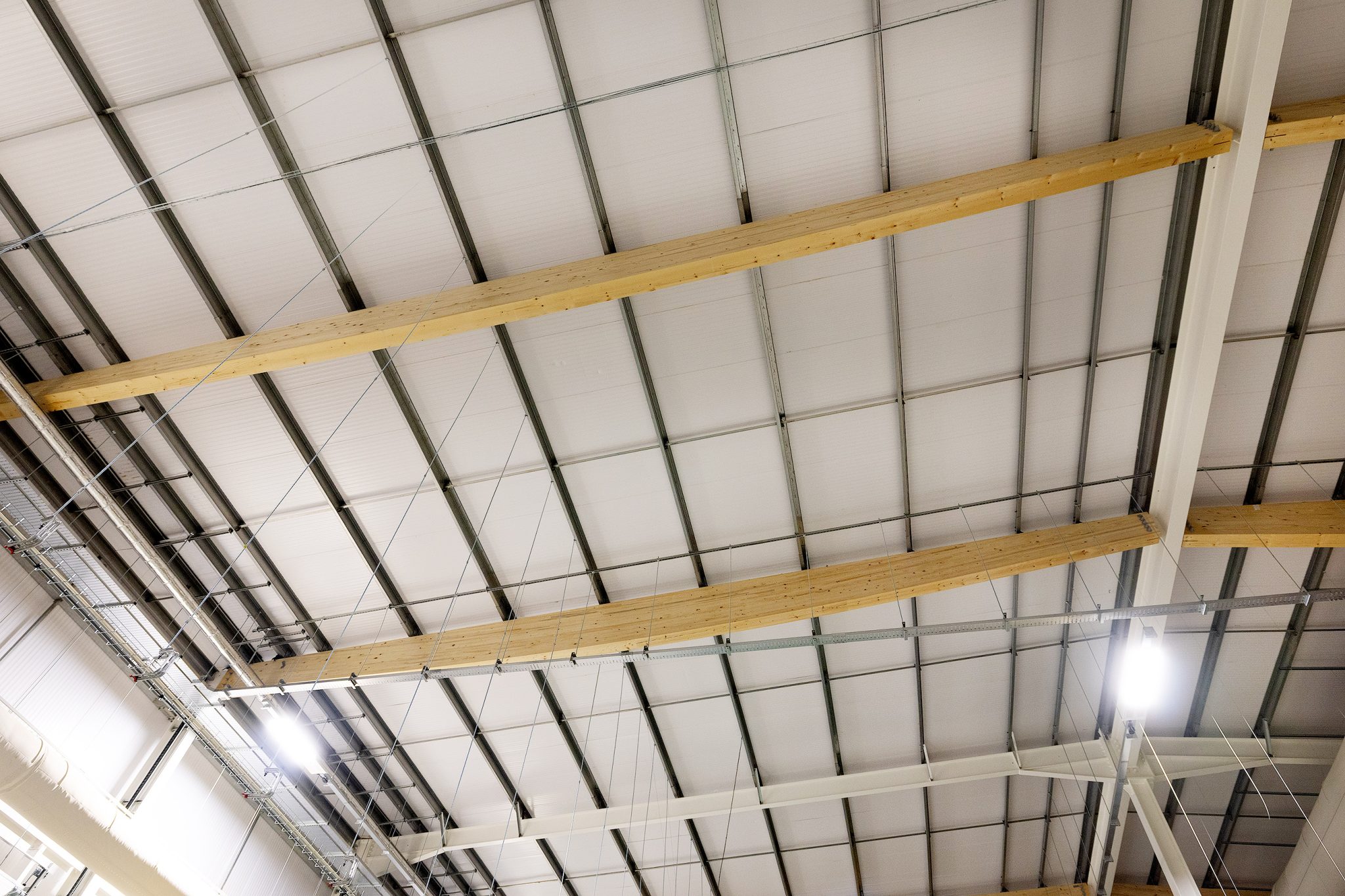
The building uses almost 1,500 tonnes of “lower-carbon” steel with high recycled content, manufactured using renewable electricity, alongside more than 200 tonnes of mass timber beams. More than 4,400 cubic metres of “lower-carbon” concrete have also been incorporated, with locally sourced materials and shorter supply chains helping to reduce the construction footprint.

Amazon says the combined approach delivers at least a 20% reduction in construction-related carbon emissions against its previous design standards.
The all-electric facility also features rooftop solar panels and what the business describes as energy-efficient systems, with Amazon projecting it will consume around half the energy of a typical logistics building. Water-saving fixtures are expected to cut consumption by approximately 20% compared with conventional designs.

The new delivery station has created 100 local jobs, adding to Amazon’s investment of more than £4.7 billion in the north-east of England since 2010.
Alex Hallimond, Amazon’s senior operations manager at the site (pictured above), commented: “The north-east has a proud industrial heritage as one of the UK’s great manufacturing regions.
“That tradition of building things continues with this new delivery station, setting a new sustainability blueprint that could shape how we design sites in the UK around the world.”

The opening comes as Amazon progresses its £40 billion UK investment programme for 2025-2027, described as the largest in its history outside the US.

Hallimond said the Stockton facility could demonstrate how logistics infrastructure evolves through automation, innovation and sustainability, adding that replicating its design internationally could deliver significant environmental benefits.
50,000 EVs and counting: Amazon reaches delivery van landmark
[image credits: UNP for Amazon]


