
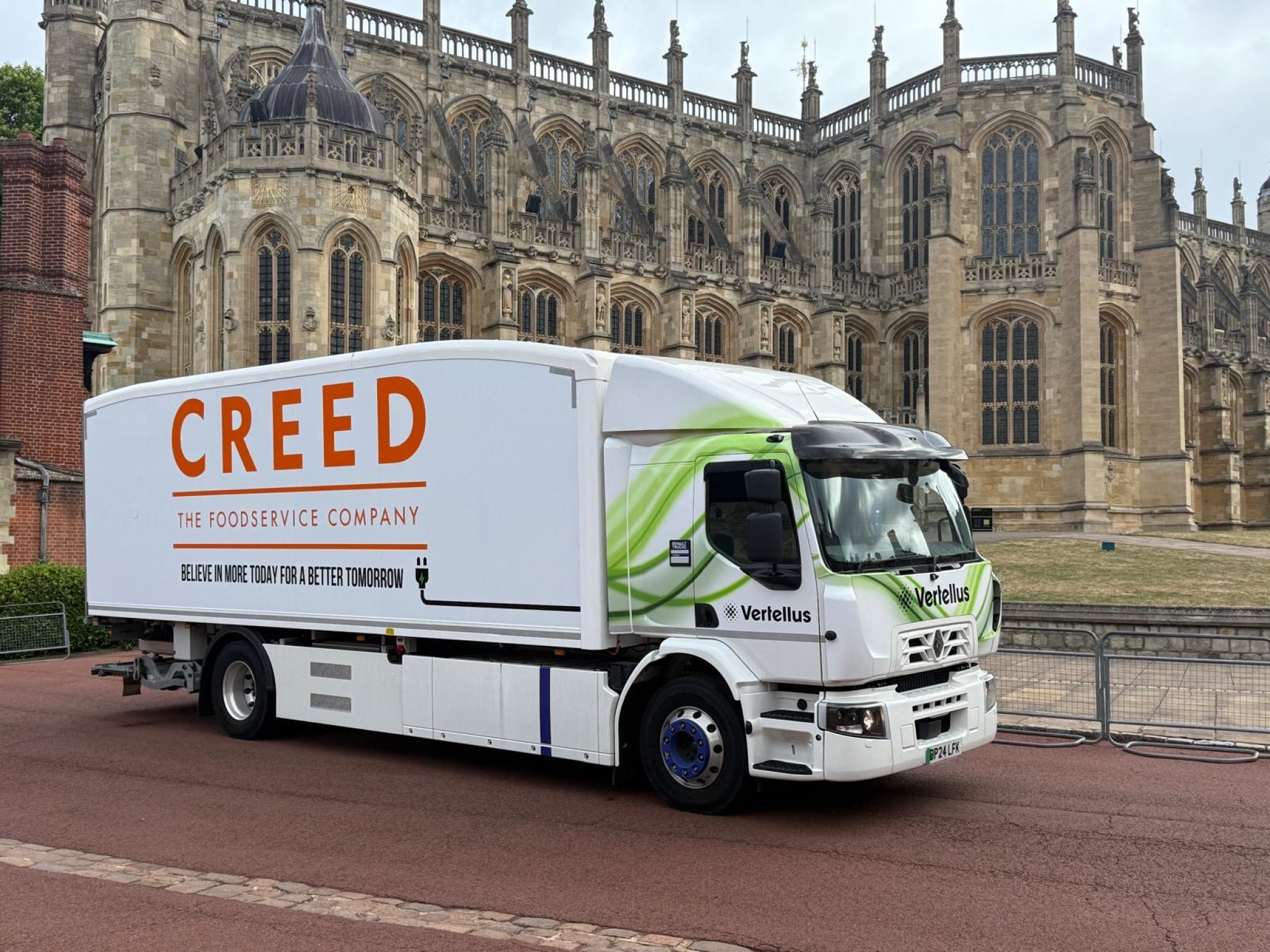

Electric heavy goods vehicles (eHGVs) can already match – and in some cases exceed – diesel performance on local wholesale delivery routes, according to new research that should give wholesalers confidence about the electric vehicle transition.
A new case study from the Scottish Wholesale Association (SWA), Renault Trucks, and specialist contract hire provider Vertellus found up to 95% of short and regional journeys operated by two wholesale businesses could be completed using electric trucks, based on real-world data.
United Wholesale (Scotland) and Creed Foodservice participated in Vertellus’ ‘EV Discovery Programme’, leasing 18-tonne Renault Trucks E-Tech D electric HGVs for 12 months at a cost comparable with diesel equivalents. The vehicles were deployed on multi-drop food and drink delivery routes across multiple seasons, providing a practical test of their performance in day-to-day operations.
The trial found the eHGVs consistently matched or exceeded diesel performance on local multi-drop routes, while average battery use was just 36%. This suggests there is considerable additional range available as operators become more confident in using electric vehicles and planning routes around their capabilities.
The financial case was also positive. Depot-based charging delivered running-cost savings of around £10-£20 per 100km for United Wholesale (Scotland), while Creed Foodservice estimated an annual saving of £6,630. The figures are based on February 2026 energy prices.
The vehicles also delivered emissions savings of more than 50kg of CO₂ per 100km, equivalent to between 10 and 13 tonnes annually per vehicle.
However, the study highlights that challenges remain. Charging infrastructure, particularly outside built-up areas such as Scotland’s central belt, needs further development, while wholesalers also require greater confidence around route planning and incorporating eHGVs into existing fleets.
The findings are significant for the wholesale sector, where HGV fuel use accounts for 63.7% of its Scope 1 emissions in Scotland, according to SWA figures.
Ylva Haglund, head of sustainability & communications at SWA, said wholesalers had “understandable reasons to be cautious about electrification”, given tight schedules, thin margins and the consequences of failed deliveries.
“What this trial shows is that those concerns and the reality of electric HGVs are starting to diverge,” she said. “That should give wholesalers confidence to begin their own transition.”
For United Wholesale (Scotland), managing director Chris Gallacher said the trial demonstrated electric trucks could perform effectively in its day-to-day delivery operation while reducing emissions and running costs.
The EV Discovery Programme remains open to other operators wanting to test electric HGVs before making longer-term fleet investment decisions.
Read more about eHGVs on Green Retail World
[image credit: Vertellus/Scottish Wholesale Association]


