

In this series we talk to the individuals and companies helping retailers become greener businesses – highlighting the tools, technologies, and options available to support a change in environmental focus.
The final quarter of 2025 was a notable one for retail aftersales technology platform Save Your Wardrobe.
In December, it announced a partnership with Fairly Made, a French scale-up focused on supply chain traceability and measuring environmental impact. The aim is, in unison, to offer big brands a comprehensive circularity solution supporting eco-design, compliance, and measurable lifecycle extension.
Since its inception in 2017, Save Your Wardrobe has fostered relationships with expert repair and alteration experts across Europe to help its retailer and brand partners find local experts to fix garments for their customers. It has also built artificial intelligence (AI)-driven tools to help retailers diagnose problems with these items and fast-track the alterations and customer aftersales process.
Teaming up with Fairly Made means Save Your Wardrobe can now also offer retailers and brands environmental impact measurement related to their garments. This is important as 2026 is a year where more environmental regulation will require brands to know and report this information, as well as to be ready to deploy digital product passports on everything they sell into the European Union in order to improve product provenance for consumers.
This all came in the wake of October’s acquisition of Les Raccommodeurs, a B2B digital repair specialist based in France, which brings with it a long list of small to medium-sized retail and brand customers.
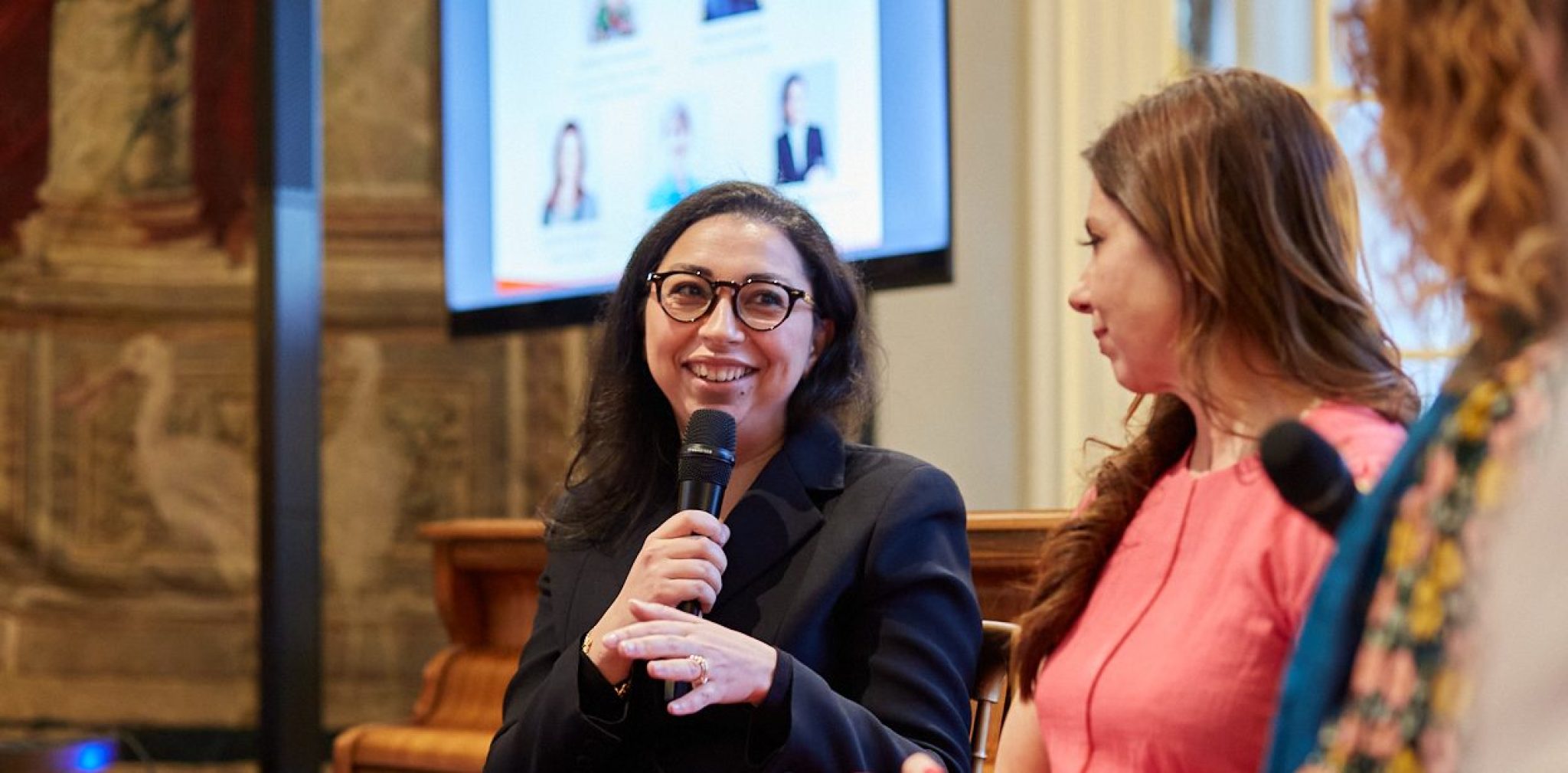
Hasna Kourda, co-founder & CEO of Save Your Wardrobe, tells Green Retail World the acquisition “has brought a wealth of experience we were lacking and a great retail understanding, particularly in France”.
This end-of-year partnership and commercial push augments Save Your Wardrobe’s position as it goes into a year when it plans a Series A funding process to support its ongoing international growth.
What is Save Your Wardrobe?
Suitably for a circularity platform, Save Your Wardrobe’s raison d’etre has gone full circle.
Co-founded in 2017 by Kourda alongside her husband, Mehdi Doghri, Save Your Wardrobe was initially touted as a platform for connecting retailers and brands to service providers who could help them offer consumers valuable aftersales services that would help keep garments in circulation and support environmental strategy.

“Companies were relying on driving sales only, which didn’t prevent waste and it caused pressure on the supply chain,” Kourda explains.
“I wanted to show the industry could build value and serve customers in a better way beyond the purchase and how we could shift attention to maximising the things we already own instead of relying on the constant cycle of seasons and selling new items to consumers.”
But in those first three years, the appetite among retailers for circularity was not there, according to Kourda, who says she has seen firsthand, where she is from in Tunisia, the impact of waste fashion on society. If it doesn’t end up in landfill or incineration, fashion waste from the Western world is often sent internationally to be sorted or disposed of – essentially shifting the ecological problems to a different geography, with Africa a regular final dumping ground for this material.
In 2020, as the global pandemic unfolded and business resistance to circular tech continued, the Save Your Wardrobe consumer app was born. The idea was to provide an ecosystem of easy to access aftercare services and a digital wardrobe for people to keep a better track of the items they owned to encourage longevity in ownership that could ultimately reduce fashion waste.
To a point, Save Your Wardrobe as a consumer app proved there was demand from for repair. It provided evidence society was thinking more circularly about their fashion purchases, and more than 100,000 people have downloaded the app.
And now brands and retailers are listening, with Zalando’s decision to work with the company on a repair and care service for its customers in 2021 viewed by Kourda as a key moment in taking Save Your Wardrobe to where it is now.
In 2022, it raised $3 million in seed funding, supported by online marketplace Farfetch. Save Your Wardrobe now has multiple brand partners, including France-based international retailer Maje, which started working with the platform in 2023.
Retailers and the need for eco proactivity
“My vision was a tool that supported brands and retailers,” Kourda says.
“But I was too early with the vision for circularity in 2017-2020. When pitching the idea, brands were interested but didn’t want to take leadership and implement circular value-added services.”
She adds: “Brands are responsible for the products they bring to market and should support customers in extending the lifecycle of these items. The consumer shouldn’t deal with shortcomings of manufacturing and quality.”
So how have things changed? Kourda still believes there is a long way to go for a full-scale retail environmental awakening, but she acknowledges there is now more momentum behind the circularity movement in the industry.
She suggests too many in the industry wait for regulation to force their hand to become environmentally-minded, when actually she thinks being more proactive in this space can lead to commercial success.
“Retailers are often waiting for things to happen instead of taking leadership and saying ‘this is for the good of the industry’ – they need to take initiative before being regulated,” Kourda says.
“My vision is slowly being adopted but there’s a long way to go to be able to have a clean industry that’s respectful of the environment and its people [and wants to prioritise having a positive impact].”
Money talks, though. Save Your Wardrobe and other circular strategies undertaken by retailers have shown there is commercial value in embracing the circular economy, with companies starting to find ways to make money from offering resale, repair, and recycling services.
“In the beginning of Save Your Wardrobe we were talking to brands about working with us to improve their environmental impact and how adopting a new model can help with climate but all the doors closed. When we focused on highlighting the financial part and bottom-line improvement, we grew.”
She adds that by showing retail leaders the numbers and the business case, “dollars signs appeared in their eyes and the doors finally opened”.
How is Save Your Wardrobe embracing tech?
Save Yor Wardrobe has launched an AI-powered damage detector which helps retailers and brands understand defects on garments, providing an instant diagnosis before planning the next steps for the best repair option.
Partner brands embed their individual policies into the system so they can offer a service related to their respective customer propositions.
“It was in answer to the lack of expertise in retail and shops, where often staff do not understand the problem, if an item is repairable, or if it is under warranty,” Kourda notes.
The AI damage detector connected to Save Your Wardrobe’s wider aftercare mapping infrastructure creates “an integrated solution to help retailers in an instant and direct them to right category of service”, she adds.
Les Raccommodeurs reinforcement
Save Your Wardrobe is confident it is now in a better position to expand following its acquisitive activity in 2025.
Les Raccommodeurs’ co-founder, Pauline Jaillant, who became general manager at Save Your Wardrobe as part of the acquisition, brings a proven track record in retail strategy too.
The plan is for Jaillant to drive growth across Europe, strengthening partnerships and expanding the platform’s impact. Save Your Wardrobe said the addition of Les Raccommodeurs places it as the “go-to partner for brands and retailers seeking scalable, best-in-class aftersales services”.
“This partnership is about more than continuity – it’s about creating an even brighter future together,” Jaillant noted in October, when the deal was announced.
“By joining forces, we’re combining our strengths to bring the very best in aftersale services: care, repair, and circular offers. And together, we’ll be able to serve you with even greater innovation, efficiency, and reach – across France, Europe, and around the world.”
That planned global expansion includes accelerating its entry into the US market, which will be supported by Save Your Wardrobe’s inclusion in the latest cohort of the MasterCard Start Path Emerging Fintech accelerator.
Kourda and Save Your Wardrobe think being part of the accelerator, alongside ten other fresh-thinking organisations, provides validation aftersales is the future of commerce, as opposed to a bolt-on feature.
“I’ve heard many times before that circularity is not profitable and not something that can be relied on, but I feel this accelerator and everything we’re building towards proves that assumption wrong. We are here to extend the benefits beyond the transaction for consumers and businesses alike.”
At Green Retail World we are giving greener retail champions, like Hasna and Save Your Wardrobe, a chance to explain how they are helping retailers become greener businesses. Please contact editor, Ben Sillitoe, if you’d like to put yourself forward for an interview on this key subject. Sharing good practice can help the wider sector move in a positive direction.
[image credit: Save Your Wardrobe]


