
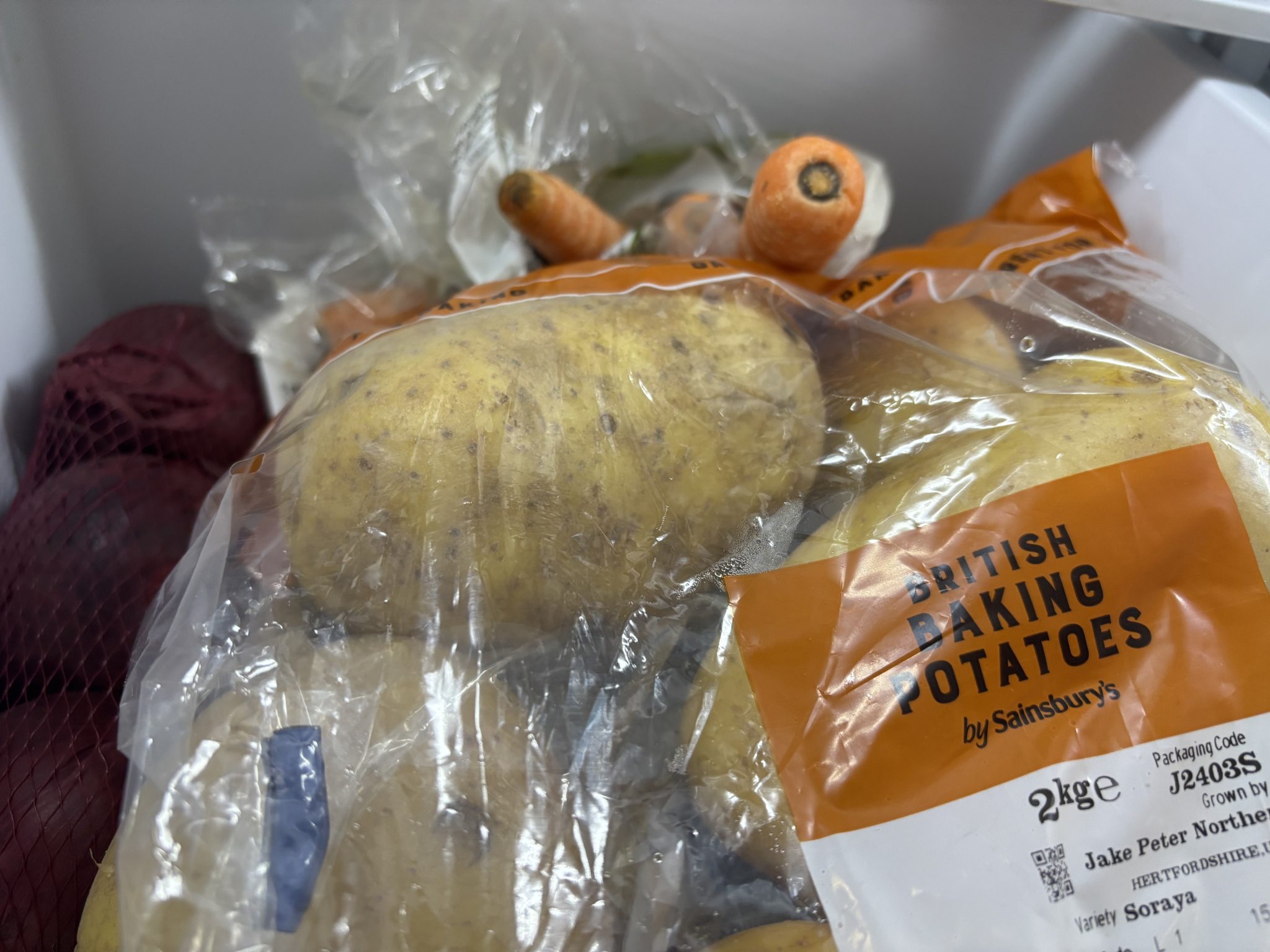

One reason why so much fresh produce ends up in our bins is because most is sold packaged which denies consumers a chance to buy an amount closer to their needs, according to research published for Food Waste Action Week.
It is a key finding from the Household Food Management Survey 2025, run by NGO Wrap’s Love Food Hate Waste campaign, which delves into the UK’s behaviour and attitudes towards food.
With what is thrown away on the agenda this Food Waste Action Week, Love Food Hate Waste said consumers’ ability to judge how much is the right amount to buy has weakened slightly for the first time in several surveys. Except for bread, most people find judging the right amount of fresh produce trickier than any other product – particularly potatoes.
The study found when it comes to buying loose, people enjoy not having a date label on produce and are happy to use judgement alone on when fruit and vegetables are still good to eat far more than a ‘best before’ date – this is most notable for onions (75%).
Outside of the fresh produce category, people are most likely to use date labels for items for which food safety is an issue, such as fresh chicken and pork. For milk, consumers are evenly split between using their judgement or a date label.
Wrap reported in its Plastic Pact Annual Report 2024 that only 19% of fresh produce is sold loose by large retailers.
Key stats from the Household Food Management Survey 2025:
- The potato is the UK’s most binned item. Each year in UK homes an estimated 510,000 tonnes of potatoes are binned, representing 46% of all potatoes bought, according to Wrap
- Self-reported food waste has increased to 21% for the four key food items monitored – bread, milk, potatoes and chicken
- 78% said they would be likely to buy their usual fruit and veg loose if they were sold that way, while 46% said they would be likely to buy their usual fruit and veg in plastic packaging, such as plastic trays/boxes
- Love Food Hate Waste found a disparity between people’s perception of their own waste and the reality, with nearly eight out of ten interviewees believing they waste less than the average.
The Household Food Management Survey is the largest and longest running survey of its kind, and you can read the latest results and more about it here.
Jackie Bailey, senior campaign manager for Love Food Hate Waste, said: “We see fresh produce as the real kitchen victim when it comes to food waste.
“Because most fruit and veg is sold packaged, we have to buy what we’re given not what we need, and that means a lot goes to waste. As a result, our bins have a diet that most nutritionists would envy. And we’re a long way from breaking our food waste habit because of this packaging.”
Wrap estimates 60,000 tonnes of food waste could be prevented if all apples, potatoes, and bananas were sold loose, representing 8.2 million shopping baskets’ worth of food. It is also calling for a consultation for a potential ban on packaging for 21 products in the fresh produce aisles.
Love Food Hate Waste says retailers can make a difference in this space by making it easier to purchase the right amount of food through better access to loose produce, as well as by introducing smaller pack sizes at comparable prices. In addition, it said curbing in-store promotions that encourage over-purchasing for perishable foods and enhancing people’s skills in meal planning and portion estimation can all help.
Gander and Trust
Retail tech company Trust announced this week it is embarking on a strategic partnership with food waste prevention organisation Gander. It will officially be unveiled at Retail Technology Show 2025 at London’s Excel oon 2-3 April.
Again, neatly timed for Food Waste Action Week, the tie-up aims to transform inventory management and optimise markdown processes in grocery and convenience retail, with Gander’s markdown solution integrated with Trust’s inventory management and electronic point of sale (ePOS) systems. The companies say it is a way for retailers to gain revenue from previously underutilised stock.
Trust’s inventory management tool will log price reductions in real time, syncing directly with the Trust ePOS system and Gander’s markdown platform. Once a reduced item is sold via the ePOS, it will be automatically removed from the inventory list and Gander’s marketing channels, ensuring accurate stock visibility.
Mike Dotson, managing director at Trust Retail, said the partnership demonstrates “how collaborative innovation in fintech and retail technology can deliver meaningful efficiencies for grocery and convenience retailers”.
Stacey Williams, business development director at Gander, added: “By leveraging digital platforms, we ensure retailers maximise their margins while reducing food waste, enhancing customer engagement, and streamlining store operations.”
Visitors to the Retail Technology Show 2025 from 2-3 April can meet Trust and Gander at stand A48.
[image credit: Green Retail World]


