

I’ve been racing around again, including travelling outside the UK, assessing what’s interesting and what’s not from a retail sustainability perspective.
From Retail Week and The Grocer’s Live 2025 event in North London to EuroCIS in Dusseldorf, Germany, and back to London in the form of the fascinating Source Fashion expo at Olympia, it’s clear to see there’s so much effort and innovation going on in reducing the industry’s environmental footprint. From designer-led start-ups to publicly-listed Korean tech enterprises, moves are being made by multiple organisations to make a positive difference.
With president Donald Trump, his obsession with plastic straws, and the rollback of some environmental commitments by the US government taking up column inches in the press, it’s important to shine a light on those fighting the good fight for the future of the planet.
It must be said retail is still rife with overconsumption, wasteful practices, and there has been a deprioritising of sustainability at C-suite level in some quarters, but I’ve picked out a taster of some good things going on that I’ve seen over the last couple of weeks to keep up a positive narrative.
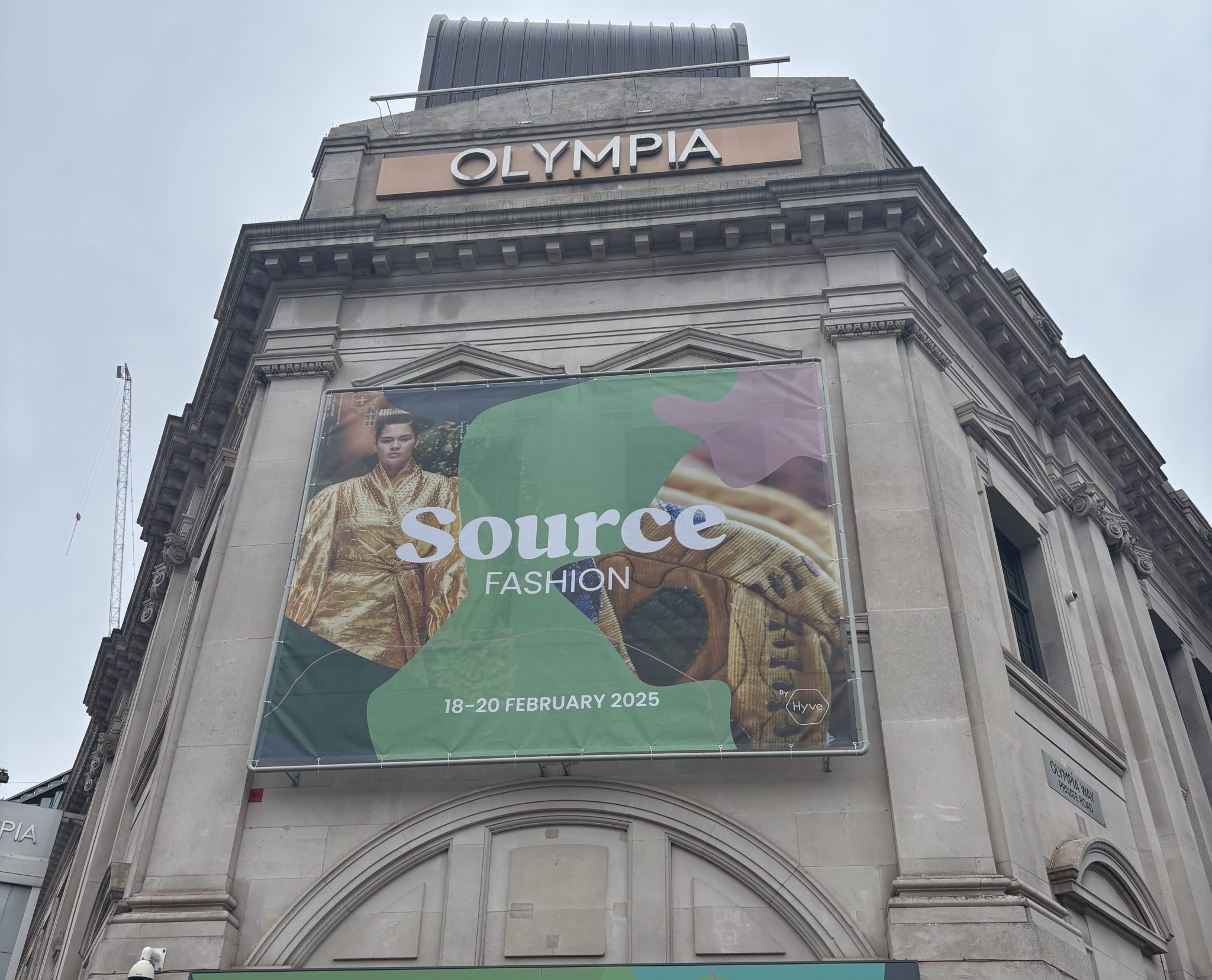
Source Fashion
It was my first time visiting Source Fashion in London, and I’ll be sure to return. The event comprised an exhibition of fashion suppliers from all over the world, catwalk shows highlighting the latest in responsible fashion, and a really interesting conference programme.
From conversations about on-demand manufacturing and use of more circular textiles to debates around building transparency in retail supply chains, the rise of vintage clothing, and how best to work with regenerative materials companies, the three days at London Olympia were jam-packed with good content.
I was only there for one day, but was privy to a panel debate on how to better align sustainability with profitability in retail.
Simon Platts, former sourcing & ESG director at Asos and now influential consultant in this space, talked up the importance of being more “commercially sustainable”.
He spoke of the need for ESG and sustainability teams in retail to “authenticate and give cadence to everything [they’re] doing”, adding that most retailers do not yet know their entire supply chains – and should be doing all they can do build this sort of transparency.
“The opportunity to unlock inefficiencies by knowing more about your supply chain can give you the capacity to go back to the business,” he explained.
As soon as ESG teams are talking about commercial values and not just trying to appeal to people’s hearts with the sustainability conversation, then they can drive more influence, Platts added.
It’s particularly important to do this today, he continued, because so many retailers are simply just trying to survive in what is a brutal trading environment.
“If you can put a financial sway on it [sustainability strategy], that will be the thing that makes [c-suite] take a breath [and consider your proposition],” he advised.
“Go and unlock that capability and think about how you present that to the exec board. Don’t lean on them from a morals point of view when they are under so much pressure.”
So much of the sustainability conversation at industry events can be categorised as lots of talk and lack of action, but it was refreshing to hear Platts suggest some gamechanger ideas. The one that stood out for me was the concept of a sales/discounts tax on retailers, which would mean companies are effectively charged for overproduction.
It’s not an idea I’ve heard before and probably not one that retailers are going to be sticking ther hands up for any time soon but it’s one that would certainly make fashion retailers think differently about their sourcing and manufacturing. And could have a major impact on curbing overproduction and overconsumption.
The catwalk shows at Source Fashion, meanwhile, showcased designs from AllSaints founder Stuart Trevor, whose newly established eponymous brand will come under the spotlight at the Retail Technology Show in April when I interview him on stage.

Elsewhere at Olympia I had a great chat with the founder of Worn Not Wasted (see picture, below), who has an ambition to influence designers to avoid waste fabric and build would-be waste fabric into the initial design process using his newly created template for working with materials. You can read more about the initiative here.

EuroCIS
Before heading to London, I spent a couple of days at the EuroCIS retail tech show in Germany.
So much to take in. Not a huge focus on sustainability – it was more about how artificial intelligence-enabled systems can help change retailers’ worlds. Also saw some autonomous robot cleaners from LionsBot which were pretty impressive.
However, one company stood out for me from an environmental perspective: SOLUM. The South Korea-based technology company, which specialises in electronic shelf labels (ESL) and supplies them for several retailers including REWE in Germany and Spar operator CJ Lang in Scotland, was promoting several interesting new aspects to its proposition – including some related to energy efficiency.
Knowing the retail industry is increasingly looking for more sustainable and operationally efficient tools, it has devised its ESLs with a ‘Power Rail’ that holds an integrated battery allowing for quicker and more convenient replacement when the time comes.

SOLUM says its Power Rail operates with two distinct power supply models: battery type and solar cell (light-powered) type. The former is apparently capable of sustaining ten units of 2.9-inch ESLs for over ten years without requiring battery replacement, while the latter uses indoor lighting to continuously generate power, reducing the need for battery maintenance.
And with the system communicating and operating with centralised power distribution in a store, individual ESL battery replacements are no longer required, which SOLUM said significantly reduces maintenance costs and minimises battery waste.
The SOLUM team told me numerous retailers have expressed interest in Power Rail, with the energy efficiency factor a real draw. The deployment of this tech is set to begin in European stores this year, as pilot programmes get under way.
Live 2025: Retail Week x The Grocer
Prior to this all I was at Islington’s Business Design Centre for Live 2025: Retail Week x The Grocer, and there were several sessions focused on sustainability. Julian Hunt, vice president public affairs & comms at Coca-Cola Europacific Partners, called on a more joined up, UK-wide deposit return scheme (DRS) for used drinks containers.
With Wales currently ploughing ahead with its own version and the rest of the UK launching one in October 2027, he said consistency across the UK will be important to the scheme’s success. He argued the Republic of Ireland’s DRS is showing the way forward and needs to be echoed as UK moves forward with its own version.
A panel session with Wickes, Gousto, and Fairtrade (see image, below) offered some great insights. Katherine Rolfe, head of sustainability at Wickes, said supplier engagement is vital to progressing sustainability strategy.

“We’ve targeted that 55% of our suppliers will have their own science-based targets by 2027,” she explained.
“That’s a really big focus, working with our suppliers ranging from 3M, a massive US company, to small family private firms that haven’t really thought about this at all and haven’t started measuring their footprint.”
She added: “We try to adapt to them in terms of what they need and where they are on the journey, and help them.”
Rolfe also noted 98% of Wickes’ carbon emissions come from its value chain so working with suppliers on what they are doing upstream as well as looking at the improvements they are making to the products that are ultimately sold through Wickes is a vital part of the retailer’s sustainability agenda.
Sadly, lots of delegates went elsewhere for this particular session, meaning it wasn’t the best attended presentation of the day to say the least.
I hope it wasn’t an illustration of how seriously the wider industry is taking issues surrounding the environment and ESG, but it was difficult not to make that assumption. Luckily, many were back in the seats again – and there was a full house – for Currys CEO Alex Baldock’s closing keynote in which he talked up the commercial benefits of circularity.
Commenting on the tech retailer’s burgeoning circular economy proposition, which involves the business buying back old consumer tech for repair before reselling or using the items to source components for future repairs, he described it as commercially astute.
“We’re not doing it to be admirable – we’re not an NGO, we’re a business,” he asserted.
“Of course we’re proud of helping the planet by giving technology a longer life, but I’m afraid even if I was a terrible husband, father and citizen and I cared nothing at all about the environment, [this is a strategy I would follow].”
He added that helping keep tech out of landfill and in circulation also leans on Currys’ competitive strengths.
“No-one else has got Europe’s largest repair centre, as we have up in Newark,” he noted.
As Platts said at Source London, the more we can find these commercially sustainable examples in retail and convey them to the masses, the better it’s going to be for the industry in the long run and, ultimately, the health of the planet. We need to continue finding and then talking up the commercial benefits of sustainability – that’s certainly what I intend to do.
Sign up for Green Retail World’s newsletter here.
Ben Sillitoe, editor, Green Retail World (@bsillitoe)
[image credits: Green Retail World]


