

With the World Economic Forum forecasting earlier this year a “bleak outlook” for the decade ahead, and ranking environmental risks as the greatest source of long-term concern, the relationship between CFOs and sustainability has come to the fore.
That’s the premise of new research from consultancy group Kearney, conducted alongside We Don’t Have Time, which highlights a growing link between CFOs and sustainability strategy in terms of driving value in an organisation.
Research conducted in December 2024, surveying more than 500 CFOs across several geographies, including the UK, the US, the UAE, and India, found 92% of CFOs say they will invest more in sustainability, and more than half said they will significantly increase their investments.
Kearney said the findings underline that businesses are amplifying their focus on sustainability — with sustainability not a “nice to have” but, instead, a foundational element of the business landscape. And this comes despite the narrative around US president Donald Trump’s return to the White House, which has been accompanied by the rolling back of several sustainability-related policies and commitments from the previous administration.
When asked about the focus areas of their sustainability investments, CFOs prioritised initiatives with tangible, near-term impacts on emissions reduction. They were: increase the use of sustainable materials; drive sustainable innovation and partnerships; manage energy; reduce waste; focus on ESG regulations and ratings.
Other priorities include decarbonising supply chains, educating the workforce, reducing travel, and offsetting emissions.
Some 93% of CFOs in the study agreed they envisioned a clear business case for investing in sustainability, and this sentiment is consistent across geographies. But 69% expect a higher return on investment from their sustainability initiatives compared with conventional investments.
Additionally, 61% view sustainability investments primarily as a cost decision rather than as something that creates value.
Kearney said this apparent contradiction shows that although CFOs recognise the potential for long-term gains, immediate financial pressures and uncertainties could be resulting in sustainability efforts becoming viewed as cost centric.
However, there is a cost of inaction, and many CFOs are acknowledging the financial risks associated with a failure to transition to sustainable business practices. Nearly two-thirds of CFOs indicated that they already measure the cost of sustainability inaction.
In the US, 75% of CFOs have established such metrics. In the UAE it’s 67% and in the UK and India it 58%.
Kearney argued CFOs have a unique role in bridging financial acumen with business strategy. It said sustainability strategy coming from finance leaders helps create value because KPIs can be set, business resiliency is a key factor, CFOs can collaborate with wider departments, and those in charge of funding in an organisation tend to provide clear reporting structures.
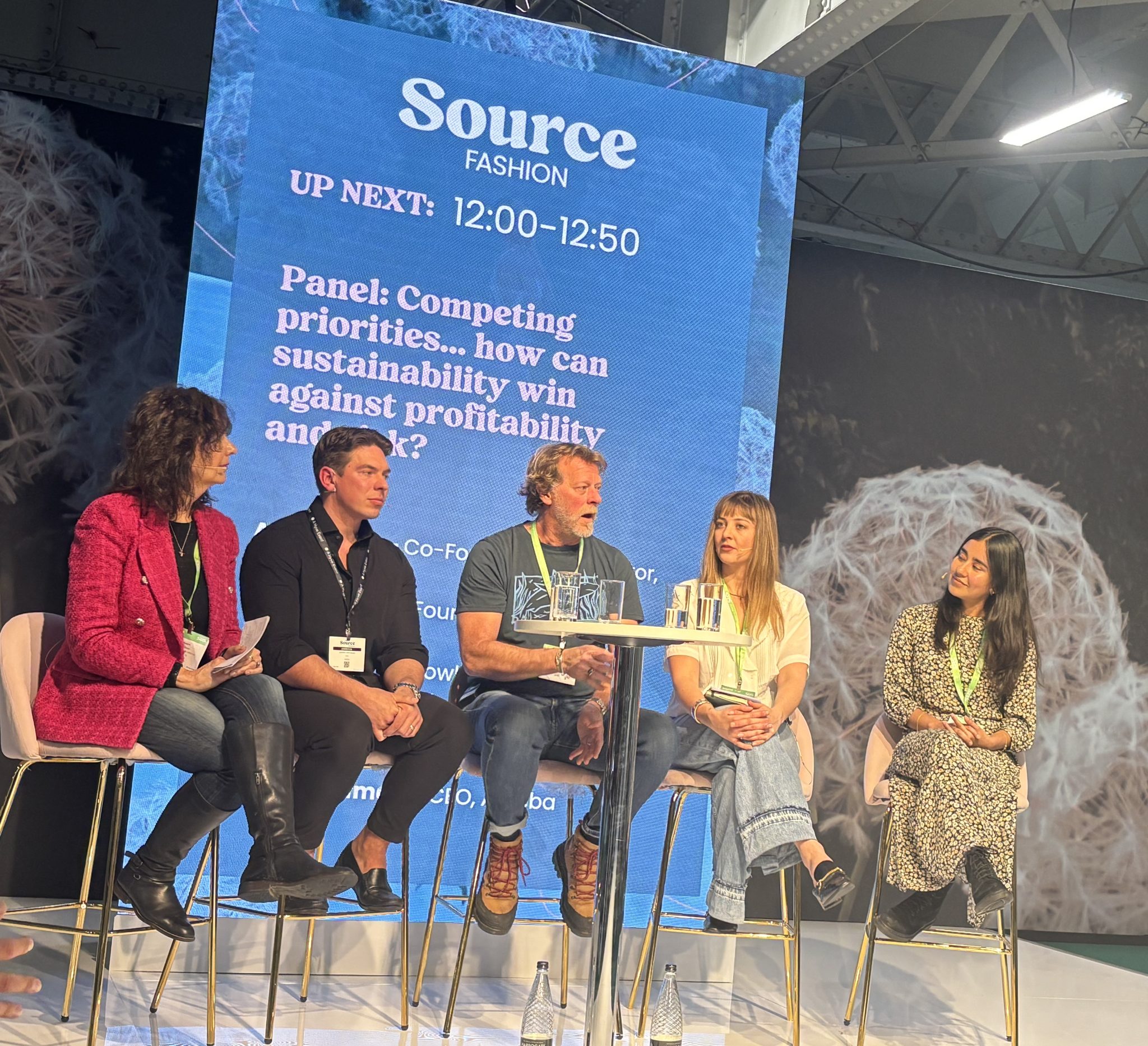
Green Retail World was at Source Fashion, at London’s Olympia, on 20 February, hearing from retailers and experts in the fashion sustainability space.
Anna Berry, co-founder of Retail 100 Consulting, and ex-John Lewis head of buying, said it’s crucial to find a way to promote the commercial benefits of sustainability. Highlighting how the environmental agenda can make organisations money is needed “to move sustainability forward”, she said.
And ESG teams convincing the board — be it chairperson, CEO or CFO — has to be a priority for progress to be made.
“If it’s not coming from top down it’s difficult to make this happen,” she noted.
[image credit: Green Retail World]


