

A series where we hear from retail’s movers and shakers about how they are tackling the challenge of becoming a greener business in an industry that is far from green – assessing organisational change, eco initiatives, and much more.

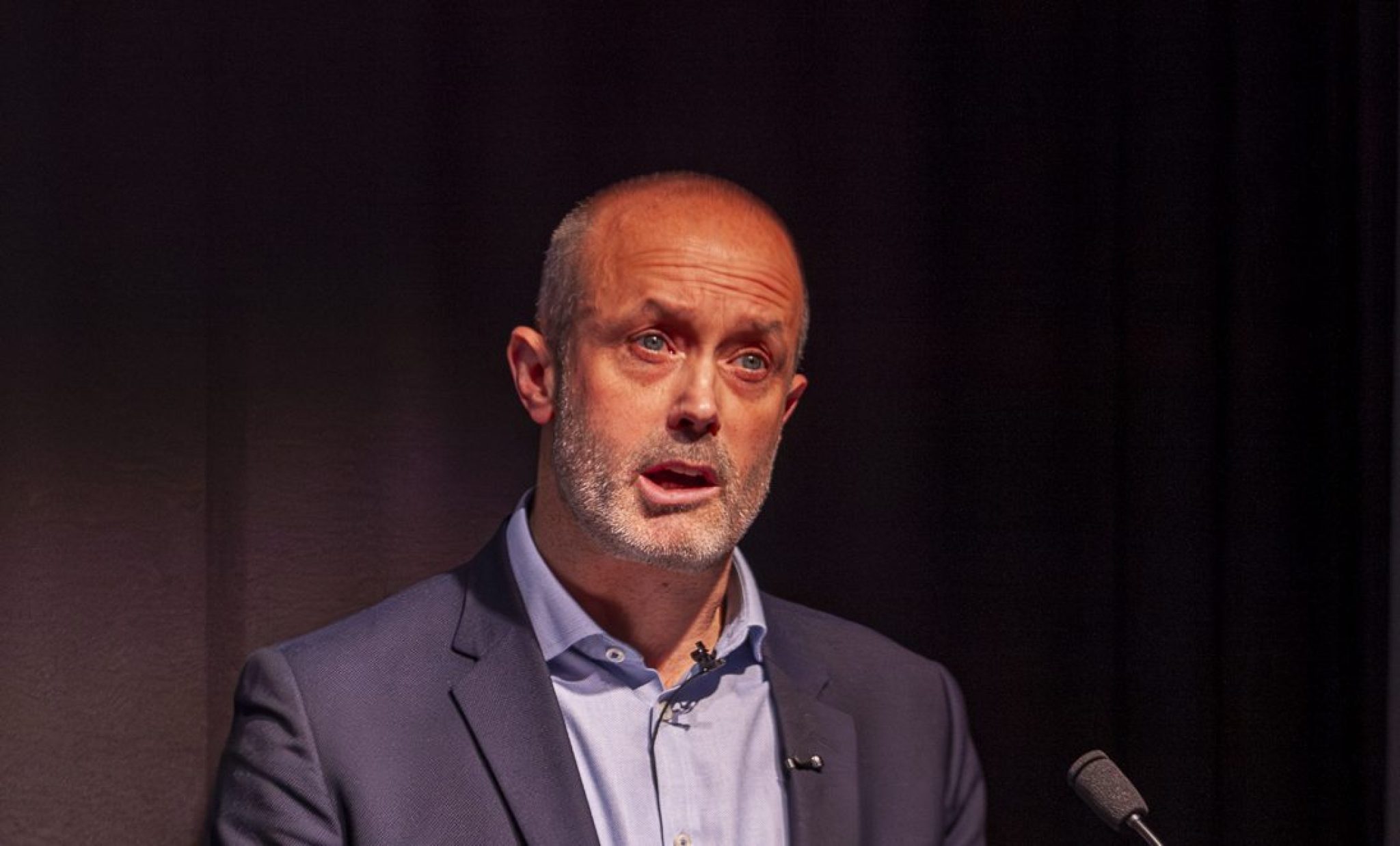
To kick start the year at Green Retail World (GRW), we caught up with Amazon UK & Ireland country manager, John Boumphrey (JB), to talk start-up strength in the sustainability space and how his organisation is supporting the ecosystem with its annual Amazon Sustainability Accelerator programme.
Last June, Amazon announced the companies selected for its 2024 accelerator – and in September it revealed those which were chosen to go into pilot stage alongside Amazon.
GRW: Why does Amazon keep running the sustainability accelerator?
JB: We want to ensure that Amazon is a force for good wherever it operates in the UK. A big part of this is rooted in our commitment to, and investment in, sustainability. We see this as a win all round – it’s good for the planet, for our customers, for our communities, and for our business.
A couple of years ago we started to think about how we could best support sustainable businesses. We already ran programmes like the Climate Pledge Friendly to help customers identify some of those products on our store. However, we wanted to provide something more hands-on for entrepreneurs who were prioritising sustainability in their business models. We also knew there was appetite from the investor community in seeing these types of businesses succeed, but they were clear that the start-ups need better support to get there.
In 2022, we launched the first ever Amazon Sustainability Accelerator in partnership with EIT Climate-KIC and Growth Studio. We designed it to help founders navigate the challenges of starting and scaling a sustainable business, with expert-led workshops, specialised mentorship, a tailored curriculum, and access to a network of like-minded founders.
The accelerator allows us to cultivate relationships with groundbreaking technologies and products. This year, for the first time, we gave start-ups the opportunity to pitch their technology for a trial in Amazon’s European operations to address sustainability challenges. Not only does this help reduce our environmental impact, but it creates a blueprint for more sustainable practices across the industry.
GRW: What’s the most interesting thing about the 2024 cohort and what are you hopeful of achieving with this accelerator?
JB: Last year’s cohort represents an extraordinary diverse range of industries, with each start-up addressing sustainability challenges through innovative technologies and products. For example, Ops Clean’s detergent sachets reduce CO2 emissions by over 95%; ZIG+STAR’s adaptable children’s footwear extends product life and minimises waste; and Breathe Batteries’ software improves the charging time and lifecycle of electric vehicle batteries.
Through the Amazon Sustainability Accelerator, we want to support more entrepreneurs scale their cutting-edge sustainable solutions. Our goal is to see these start-ups secure new investment, expand their customer bases, and inspire further innovation across their respective industries.
Ultimately, our core focus remains the Climate Pledge, which is Amazon’s commitment to become net-zero by 2040. Every day, we are working towards this goal, but to get there, we need to continue to collaborate with partners in our ecosystem – including those start-ups on the accelerator. Our mission is to uncover, accelerate, and embed the most exciting sustainable innovations globally through Amazon and Amazon Web Services’ expertise and network.
GRW: Which startups to go through the accelerator have had most success to date? Are you expecting to create some household name brands in due course?
JB: It’s difficult to pick just one! Our last two cohorts have raised over £38 million, and increased their sales on- and off-Amazon by more than 700%, following their participation.
In 2022, we had SURI, the sustainable toothbrush company built in London, which shipped over 100,000 toothbrushes just 15 months after joining the Amazon Sustainability Accelerator when the product was still in the concept stage. SURI has now been featured in BBC, CNN, GQ and The New York Times – to name a few – and the founders are now preparing to start selling in Europe and the US soon.
In 2023, we welcomed Seep to the accelerator. This is a UK-based cleaning brand designing plastic-free sponges, cloths and household essentials, and it’s now available in Tesco and Whole Foods across the country. This made Tesco the first national supermarket to stock a dedicated range of eco cleaning tools.
Finally, oat milk company MYOM from the 2024 accelerator, is about to receive a two-star great taste award, and from this year will be available in a top-four major supermarket retailer.
Our aim is for the Amazon Sustainability Accelerator to be the best place in the world for entrepreneurs to create cutting-edge sustainable products and technologies.
GRW: What can you tell us about the start-ups that have actually piloted with Amazon this time around? Re-Zip seems like an interesting concept, especially with the likes of Ocado gaining some traction with reusable packaging. Reusable packaging in the online space seems to make a lot of sense, right?
JB: We had a total of 19 businesses join the accelerator in 2024. Eight of these were product-based businesses, who pitched their ideas to investors at the Barbican at our Demo Day. In a second part of the accelerator – new for this year – we launched our ClimateTech pilots. Here we selected 11 start-up businesses who are focused on recycling technologies, packaging and energy in buildings to pilot their technology with Amazon’s operations across Europe.
Let me give you a couple of examples of those startups and how they’re working with us.
Our focus on packaging is part of our wider commitment to sustainability, and we’re making tangible progress.
Since 2015, we’ve reduced the average per-shipment packaging weight by 43% and avoided a total of more than three million metric tons of packaging. Re-Zip from Denmark and Hipli from France have already supported our packaging reduction efforts by shipping close to 100,000 orders across six countries using unique and reusable packaging, some of which can be returned to Amazon, or reused by the customer themselves.
On the recycling front, Circu Li-Ion from Luxembourg is helping to extend the life of Amazon’s batteries, using robots to disassemble and support batteries upcycling, giving them a second life, reducing lithium-ion waste and decreasing carbon-intensive material extraction.
Elsewhere, Cheesecake Energy from the UK is deploying its compressed air and thermal technology to provide safe, reliable energy storage within Amazon’s European operations, reducing emissions from electricity usage.
GRW: How hopeful are you about retail/commerce and the business world’s commitment to environmental welfare? And how can we encourage more innovation in the retail industry to help tackle the climate crisis?
JB: We are hopeful about the industry’s commitment to addressing climate change. Firstly, we continue to see significant interest from organisations in joining The Climate Pledge. In fact, we now have more than 500 part of the pledge worldwide.
Entrepreneurs are coming up with great solutions, day in, day out – and this is one of the key drivers behind why we launched the Amazon Sustainability Accelerator. The talent and innovation shown by our start-ups gives us hope for the future.
Not only this, but people continue to send us clear signals that they want to buy products that have a more positive environmental impact. In a recent Amazon-commissioned survey, two-thirds of UK shoppers want retailers to help them identify products that have a more positive environmental and social impact.
This is a decisive decade for the environment. The more we can do collectively to make the most of the talent, innovation, insights and resources in our sector, and to enable others to think big and instigate new, more sustainable ways of doing things, the greater the rewards for these businesses and the planet which we’re all so deeply vested in. We need increased collaboration between industry and business, policymakers, and investors to bring innovative solutions to market. We know we are part of the journey.
At Green Retail World, we are giving retail executives and industry leaders, like John Boumphrey, a chance to explain how they are enacting environmental change within their organisations. Please contact editor, Ben Sillitoe, if you’d like to put yourself forward for an interview on this key subject. Sharing good practice can help the wider sector move in a positive direction.
[image credit: Amazon]


