

In this series we talk to the individuals and companies helping retailers become greener businesses – highlighting the tools, technologies, and options available to support a change in environmental focus.
Online circular economy platform TheLittleLoop will rebrand to Lloop later this year when it expands into acquiring and reselling adult clothing sourced from customers looking to give a new life to their unwanted garments.
Since Charlotte Morley founded the business in 2020 – it began as a childrenswear rental operation which received backing from two BBC Dragons’ Den entrepreneurs before concentrating on resale – kids clothing has been the focus. But with growing demand from UK retailers and consumers alike, the company is eyeing new horizons.
Morley tells Green Retail World she expects the new name will be in place by the autumn, with TheLittleLoop maintained as a sub-brand – “think Mini Boden”, she says, alluding to how fashion retailer Boden subcategorises its childrenswear range.
The acceleration and wider remit comes as the founder believes the company she created has established itself as an “easy to use” resell service for consumers and an embedded partner for retailers that can generate them a passive income without adding to their operating costs.
Industry support has been recruited in the form of ex-Jojo Maman Bebe CEO Gwynn Milligan and former Asos ESG director Simon Platts, who have taken on advisory roles at the business.
It’s is an organisation with momentum at the start of 2026. And with several Ecodesign for Sustainable Products Regulation landmarks imminent – including, this week, the European Commission adopting measures to prevent the destruction of unsold apparel, clothing, accessories, and footwear – strong foundations for a more circular economy are being put in place.
What is TheLittleLoop?
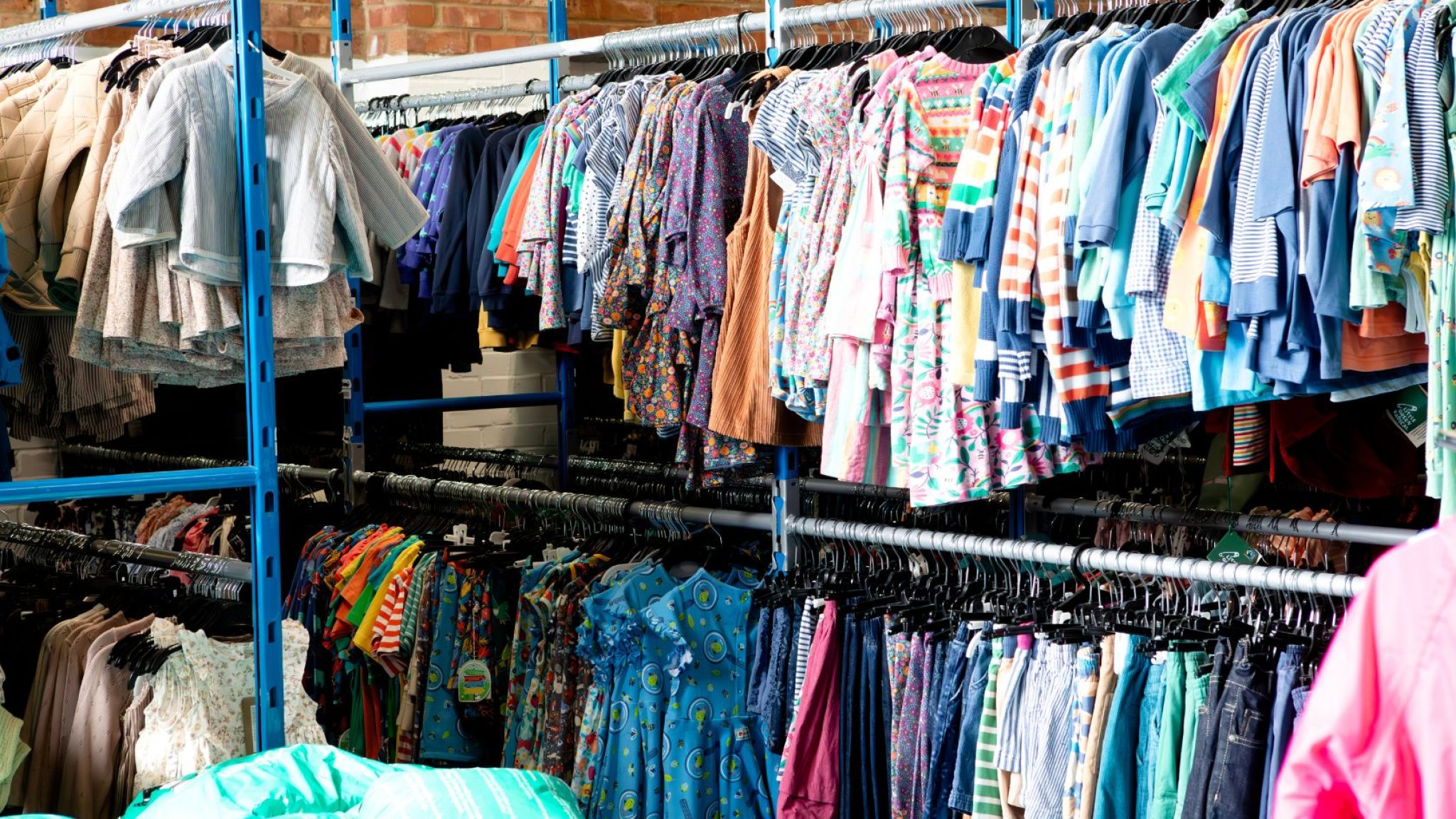
TheLittleLoop allows consumers to buy second-hand goods online (childrenswear only, at present).
The stock is secured in multiple ways: people are encouraged to trade in individual items and they receive 30% of the sell-on fee, or they can fill a bag with unwanted items for Morley and her team to sort and receive 25% of the sell-on fee.
The platform has also teamed up with a dozen retailers (more to come in the coming months) to offer a resale service. Powered by TheLittleLoop, these branded resale services help the platform gain access to more stock from retailers of ethical goods.
In each case, customer rewards come in the form of vouchers that can be redeemed on TheLittleLoop website or directly at the partner brands.
Morley says in 2025, her company achieved year-on-year revenue growth of 250% – and a 77% annual increase in returning customers. Consumers earned £33,000 in credits and vouchers over the course of the year, as 39,000+ items sold via the platform.
All goods traded in are sent to TheLittleLoop’s warehouse in Grateley near Andover in Hampshire, where they are sorted and made ready for resale.

What is TheLittleLoop’s focus in 2026?
Fundraising, new retailer partnerships, and the extension into adult clothing represents the Holy Trinity of targets for TheLittleLoop in 2026.
The first of those is going pretty well. Having started to raise funds in January 2026 with a target to generate £670,000, the situation at the time of writing is 125 investors have ploughed £739,000 into the round. Morley says the company hit 100% funded in just three hours, underlining the interest in the circular economy and in her brand, which counts Jojo Maman Bebe, Roarsome, and Little Green Radicals as partners.
There are still opportunities for equity for some investors.
After Morley’s Dragons’ Den appearance in 2022, TheLittleLoop gained £140,000 investment for a 25% stake in the business from ‘dragons’ Deborah Meaden and Steven Bartlett. At the time, the company was aiming to make childrenswear rental mainstream, but Morley says the UK is a market where people desire ownership.
“It’s not easy to change consumers’ habits,” she says.
“We were having to do all the education, which is extremely expensive and we weren’t changing behaviour fast enough. Vinted then exploded – and this planted a seed.”
Despite a year-long trial in John Lewis’s London Oxford Street store involving rental alongside resale, which came to an end last summer, it’s now full steam ahead with resale. Morley estimates it’s a £32 billion market in the UK alone, “possibly more”, and she is laser-focused on helping find a new home for the circa 1.6 billion unused garments clogging up people’s wardrobes, while driving revenue for TheLittleLoop and its partners along the way.
Are we entering retail circularity 2.0?
Those trying to support circular economy, resale, and takeback initiatives in retail should be commended for getting the movement so far but it has been stunted by a lack of focus on the consumer, according to Morley.
“It’s circularity mark one but it’s not hitting the right note asking customers to bring items into store as no-one heads out lugging a big bag of stuff – it’s not the way it works,” she argues.
“To date, the systems have been easy for the retailer to implement but not easy for the customer so they haven’t had the uptake.”
Morley adds: “Just to get brands’ heads around the idea of delivering circularity was a big enough hurdle but now circularity 2.0 is thinking about how to do it in a way that’s great for customers.”
For TheLittleLoop that means one central place for consumers to send their preloved items – Morley says consumers favour this rather than using dozens of brand-specific resale and takeback initiatives. And Morley’s company does not charge retailers for aligning with its platform – she sees the value coming from gaining access to their stock.
“Second-hand lives and dies on stock supply – the brands give us access to great stock,” she says.
“We partner with high quality and proven ethical brands so we know we’ll get good supply. We don’t charge a set-up or monthly fee – we ingest the garments, and when we sell them we calculate a percentage and give that to brands who are earning passively from our tie-up.”
This is how retailers and brands should be thinking about resale, according to the entrepreneur, who argues that Vinted and eBay’s success in the second-hand market is “essentially cannibalising brands”. This is impacting primary sales too, she adds – but by working with TheLittleLoop, they can stimulate “seamless” revenue from preloved goods.
Constantly iterating
Morley’s background is in tech – she doesn’t describe herself as a retailer, despite her two years spent at online marketplace Notonthehighstreet.com (NOTHS).
At NOTHS she was head of product and focused on “making it seamless” for consumers to buy gifts. She left with the mission to provide a similarly slick service in the circular economy – something “more purposeful” that could play a part in reducing overconsumption, which experts continue to report as a problem that puts pressure on the planet’s natural resources.
The result of those endeavours is TheLittleLoop, soon to be Lloop – and the founder describes it as “an aggregator for takeback schemes so customers have only got one place to go to”.
“We have multiple channels for reselling, for example on our marketplace and via eBay – but using us means the customer has one place to send back clothes,” she adds.
“We’re still a start-up but we know what we are doing – we’ve nailed our operations. We’re a tech and ops company – you can’t be a resale company without having that.”
Morley continues: “When a customer imports their product for resale a digital shadow is created, and when we receive it we can bring it up and send it off for a quality check and for its photograph to be taken and then we resell it in a lot less time than if we didn’t have the system.”
Artificial intelligence is being used to check if a received garment is already in the inventory, and this gives the platform a chance to build greater depth to its SKUS which Morley claims is “unheard of in second hand”.
“All of this has been five years in the building.”
More work will take place this year on brand integration, smoothing the process for retailers to align with TheLittleLoop, including allowing them to launch their own-branded pages listing preloved items for sale. Morley also wants to develop a more nuanced pricing model so consumers and brands can earn more from better quality items.
“This is the joy of us being a tech company – we listen and we iterate,” she states.
“Retailers have to think about circularity like every other touchpoint across their channels; it has to be incredibly easy and rewarding for customers. The aim is to give them joy without them having to put the extra effort in.”
At Green Retail World we are giving greener retail champions, like Charlotte and TheLittleLoop, a chance to explain how they are helping retailers become greener businesses. Please contact editor, Ben Sillitoe, if you’d like to put yourself forward for an interview on this key subject. Sharing good practice can help the wider sector move in a positive direction.
[image credits: TheLittleLoop]


