
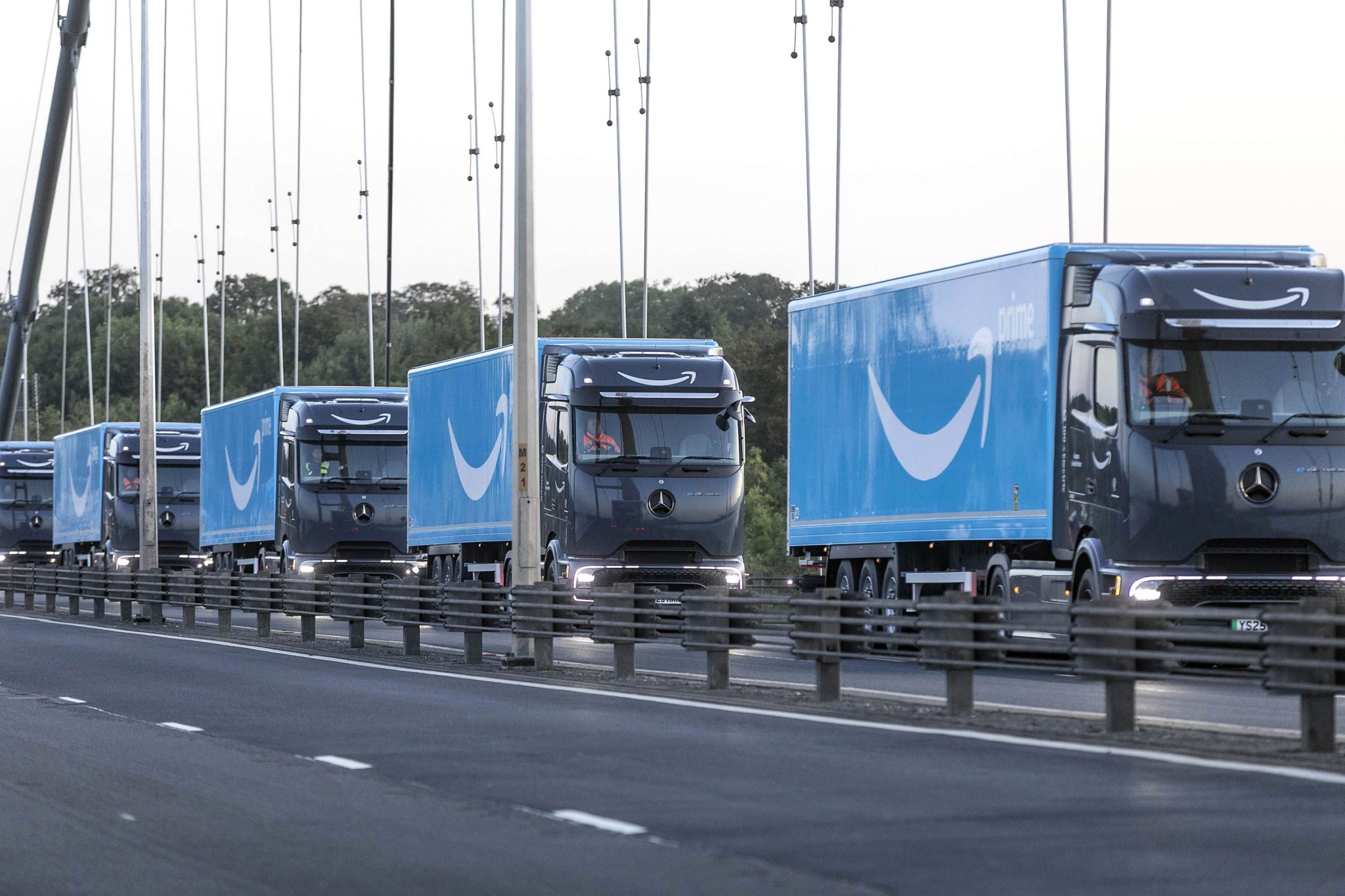

Amazon announced in January it had made its biggest ever order of electric HGVs (heavy goods vehicles) – and, this week, some of these lorries have entered the UK’s highways and begun operations.
More than 140 new Mercedes-Benz eActros 600 electric HGVs and eight Volvo FM battery electric trucks were ordered at the start of the year, building on the nine electric HGVs it already had in its UK transportation network. As of today, the first of the new fleet are active – and the tech and retail powerhouse is aiming to have 160 electric HGVs supporting its work in the UK within the year ahead.
The trucks will transport products between Amazon logistics hubs across the UK, and the new additions to the fleet this week are viewed as “a major milestone” in the company’s journey to decarbonise its UK transportation network, according to Nicola Fyfe, European vice president of Amazon Logistics.
“These trucks, alongside more electric vans and on-foot deliveries, are a win for our customers, the environment, and our business,” she added.
“The challenge to scaling this approach across the logistics industry, however, is charging infrastructure. We’ve invested in our own facilities but need continued industry and government collaboration to develop the national network required for widespread electric vehicle adoption.”
Amazon said a small number of the 40-tonne electric HGVs are part-funded through the company’s participation in the UK government’s Zero Emission HGV and Infrastructure Demonstrator programme, which is run in partnership with Innovate UK.
The Mercedes-Benz trucks have a range of more than 310 miles (500 km) when fully charged, and can transport up to a 22 metric tonne load per journey between Amazon’s fulfilment centres, sort centres, and delivery stations.
This winter, Amazon said it will also add 800 new electric vans across the UK and extend pedestrian deliveries to London’s Borough of Camden. Adding walking couriers, along with the electric vans, is part of Amazon’s efforts to minimise its carbon emissions and alleviate traffic congestion.
[image credit: Lee McLean/PA Media Assignments]


