

If fashion retailers are not already thinking about how they will meet imminent legislation comprising the Ecodesign for Sustainable Product Regulation (ESPR) then they are going to have a rude awakening in 2027 when this European Union (EU) ruling comes in.
And design and sustainability teams need to be working closer together than they have ever done in the past, using well-organised data and with transparency of their entire supply chains to drive forward their respective businesses.
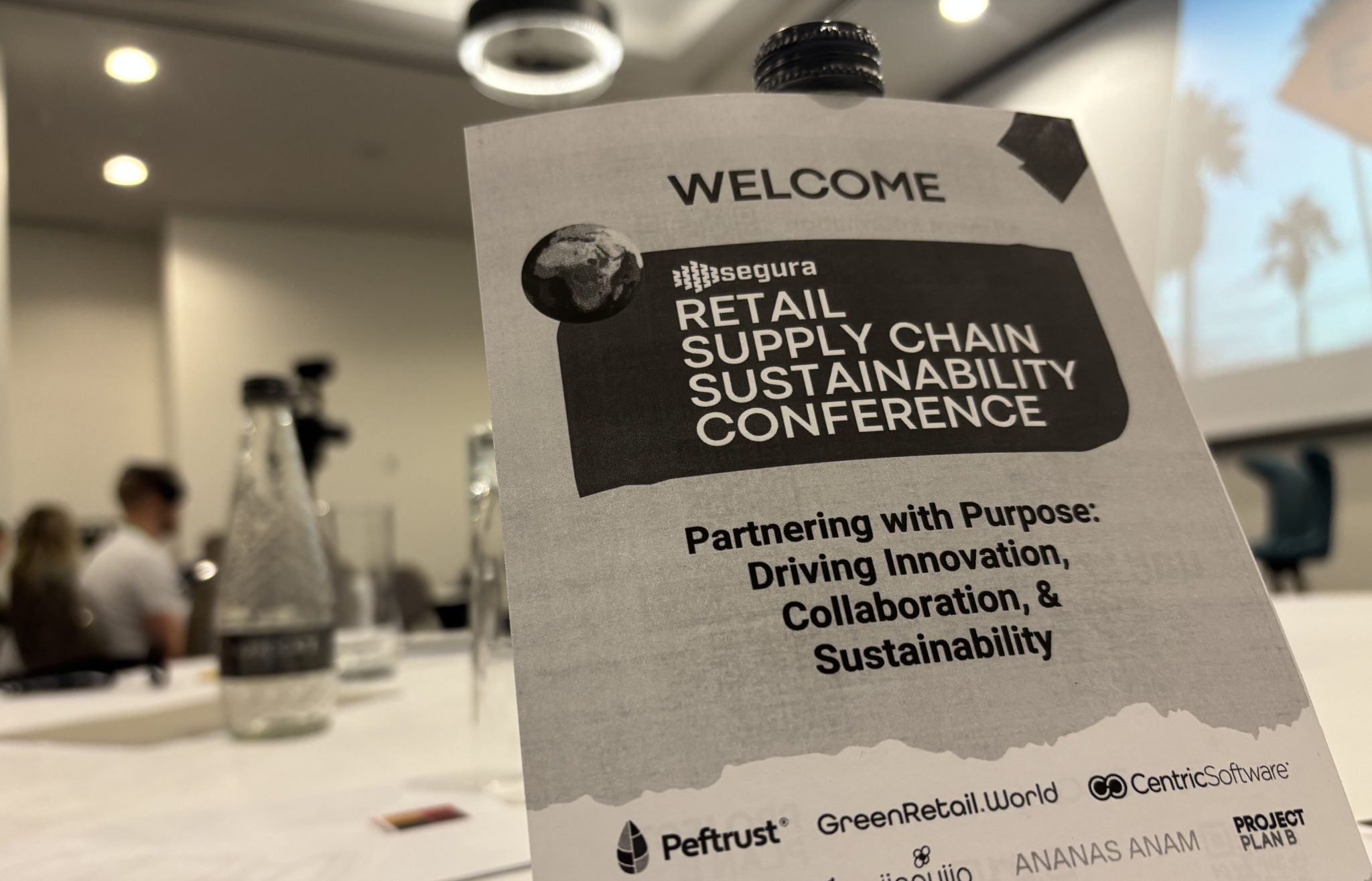
These were the key messages from Segura’s Retail Supply Chain Sustainability Conference on 18 March, where Green Retail World had the privilege of being the official media partner. Below, we’ve highlighted the five key takeaways.
Prepare for legislation now
For a long time, the legislation formalising more transparency and accountability for fashion retailers operating in the EU has been years down the line. That time is now getting closer – new legislation already hit in 2024, more will arrive this year, and other regulations for 2027 requires preparation today.
At the Segura conference, the legislative timelines were made clear. Regulations and deadlines differ based on the size of an organisation, but the audience was reminded that – despite being simplified earlier this year – large companies are obligated to monitor and report on their sustainability position by the Corporate Sustainability Reporting Directive.
Modulated fees for the Extended Producer Responsibility Scheme start this year, as the responsibility for the end-of-life management of packaging is put on the producers, while the EU Deforestation Regulations shall be applied from 30 December 2025 by medium and large companies and from 30 June 2026 by smaller organisations.
The talk of the town is ESPR, which came into play in 2024. As Segura conference delegates were reminded, the planning for the key part of this legislation needs to start now, primarily because many of the goods being sold in market at that time will soon start their production.
Central to ESPR is the digital product passport (DPP) mandate, which will call for all products being sold in the EU to have detailed information around provenance – typically accessed via a scan of a QR code on the item wash label. Segura can help retailers get prepared for this, thanks to its supply chain mapping software and strong data output, and the EU will reveal the DPP technical standards later this year to ensure the industry knows what is expected of it.
Part of ESPR will see the ban on the destruction of unsold goods, and the detail on this is also expected later in 2025. A key message from the conference sessions was retailers will need to be thinking about how to become more circular in their operations and how they are going to change the way they consider a product’s entire lifecycle.

Better choices start with better data
In the morning presentations, Denby Royal, head of sales at lifecycle assessment (LCA) solutions provider Peftrust, neatly described how retailers and brands need to move away from estimates and assumptions and towards unlocking precise, supply-chain-specific data to help make business decisions.
“Better choices start with better data,” she explained, arguing ecodesign standards in fashion are needed now rather than at a time in the unspecified future.
Retailers have data coming from everywhere, Royal said. “There’s a need to have this in a standardised format that actually gives you insights.”
Royal’s presentation underlined the futility in assessing the impact a retailer’s production and operations is having on the planet if they do not hold all their product information “in one place”.
She emphasised her point by arguing that, despite assumptions, thread count of a product actually has a higher environmental impact per product than the air transportation of that item. Looking at the data can generate surprising results for a retailer or brand, Royal noted.
“Gun to head” moment for the planet
Delegates at the Shoreditch Courthouse Hotel event also got to listen to Jane Harris, director of the Fashion, Textiles & Technology Institute at the University of the Arts London (UAL), who called the current environmental fragility “a gun to the head moment” for society.
She argued there’s no option but for her institution to ensure students are working in a more mindful way. The planet cannot sustain how people are treating it, she added.
As part of UAL’s presence at Segura’s conference, the audience was introduced to several companies that have been incubated or supported by funds from the institution. One of those, a joint venture between Salvation Army Trading Company and textile to textile polyester recycler Project Plan B, began a textiles recycling operation in Kettering last year.
It’s the first commercial-scale, post-consumer polyester recycling plant of its kind, and aims to supply the raw material back into the fashion and textiles industries. Tim Cross, CEO of Project Plan B, said his team is educating several retailers, helping them think more circularly, and changing the view that polyester is always a problem material.
Ananas Anam and iinouiio were other textiles sustainability organisations highlighted during the event. Solutions like these need all the more attention as the climate crisis continues to unfold, we were told.
The one paragraph explanation
Green Retail World editor Ben Sillitoe chaired a panel debate with Pentland Brands head of CSR Kaiesha Gibson, TFG London’s head of CSR & sustainability Francesa Mangano, and former Marks & Spencer, New Look, and The White Company design leader Barbara Horspool.
It gave a practical insight into how companies talk about sustainability internally, and one stand out bit of advice from Horspool in terms of getting the board to say ‘yes’ to a sustainability strategy was to underline the key points in one single paragraph and emphasise the missed opportunities of not taking action.
Data to support the argument also helps, and Pentland Brands and TFG London have been using Segura’s software for several years to strengthen their respective business cases and gain visibility of their supply chains.
The hour-long conversation with Gibson, Mangano, and Horspool prompted some intriguing talking points about how to engage the board on sustainability strategy, and we’ll provide a dedicated article highlighting the main topics later this week.
Teams working at cross purposes
Harris argued that sustainability and design teams had for too long been working in silos.
She questioned whether society and the fashion industry would be facing the environmental crisis it faces today if those designing products were brought into the sustainability conversation 30 years ago when it first became a hot topic.
Tools like Segura’s, which integrate with PLM systems such as Centric Software’s and LCA tech such as Peftrust’s, are designed to get multiple departments singing from the same hymn sheet. And that can only be a positive as retailers and brands seek to tackle the mounting legislative burden, reduce the impact of their operations on the planet, and uncover opportunities to drive efficiency throughout their supply chains.
[image credit: Green Retail World]


1 thought on “Segura’s Retail Supply Chain Sustainability Conference: 5 things we learned”
A perfect example of a one-stop-shop sustainability solution for brands and retailers: Segura collects, Peftrust calculates, and Centric coordinates!